
 Pre-Rolls Guide
Infused Vs. Non-Infused Pre-Rolls: What’s the Difference?
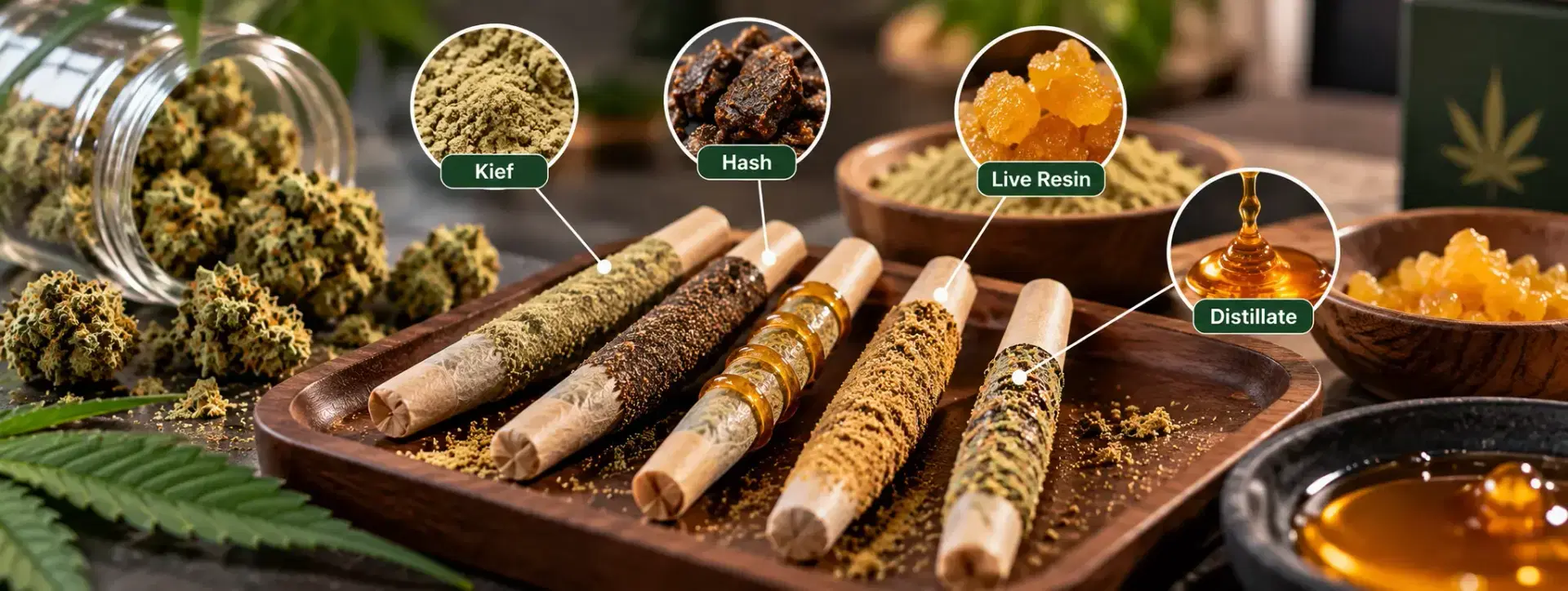
Pre-rolls offer a convenient way to shop for cannabis, but choosing between all the options can feel overwhelming. One key decision is whether to choose a classic non-infused (AKA regular pre-roll ) or an infused pre-roll . The difference comes down to ingredients. Non-infused pre-rolls contain ground cannabis flower, while infused versions add concentrates such as live resin, rosin, or distillate. As a result, the two types can differ in THC content, flavor, burn characteristics, and price. Infused vs. Non-Infused Pre-Rolls: Key Differences The biggest difference between infused and non-infused pre-rolls is what goes into the cone. Non-infused pre-rolls contain ground cannabis flower, while infused versions add concentrates to the flower. This difference can affect THC content, flavor, burn characteristics, and price. However, the exact results depend on each product’s formulation and construction. When comparing the two, look beyond the word infused on the package. Check the listed THC content, ingredients, total weight, and price. These details offer a more useful comparison than assuming every infused pre-roll is stronger, tastier, or better value. Infused and non-infused pre-rolls can look similar, but their ingredients set them apart. Here’s how the two compare across the details that matter when choosing a product. Feature Non-Infused Pre-Rolls Infused Pre-Rolls Ingredients Ground cannabis flower Ground flower plus added concentrates THC content Depends on the flower and its cannabinoid profile Often higher because of added concentrates Flavor and aroma Mainly reflect the flower’s characteristics Reflect the flower, concentrates, and any added ingredients Burn characteristics Depend on flower quality, moisture, grind, and construction Concentrates can affect burning and airflow Price Often available at lower price points Often priced higher, depending on formulation and package size Potency and ingredients The added concentrate is an important distinction. Infused pre-rolls can contain live resin, rosin, distillate, kief, or other cannabis concentrates. Each product has its own formulation, so check the ingredient list and labeled THC content instead of relying on a standard potency range. The CDC’s cannabis health guidance explains that higher THC concentrations can produce stronger intoxicating effects and increase the risk of overconsumption. Therefore, a higher THC figure is worth considering, but it does not automatically make a product better. Flavor, burn, and price Non-infused pre-rolls primarily showcase the flower’s aroma and flavor. Infused versions can introduce additional characteristics from their concentrates. However, neither type guarantees a particular flavor or smoking experience. Concentrates can also affect how a pre-roll burns and draws. The outcome depends on the formulation and construction, so claims about slower burns or clogging should not apply to every infused product. Finally, compare prices using the total weight, number of pre-rolls, and labeled THC content. The best comparison comes from the actual product details, not simply whether the package says infused. Infused Vs. Regular Pre-Rolls: Which Is More Popular? Infused pre-rolls have recently become the leading category by U.S. retail sales, but regular pre-rolls remain popular. The difference becomes clearer when we look at market data and consumer surveys separately. According to BDSA , infused pre-rolls generated $2.22 billion in U.S. sales over the 12 months ending July 2026, compared with $2.15 billion for uninfused pre-rolls. Infused products also accounted for 71% of pre-roll sales dollars in Michigan and 69% in Arizona in July 2026. Consumer survey findings offer another perspective. In its 2024 report, Custom Cones USA found that around 70% of surveyed pre-roll buyers reported purchasing infused products, although most bought them infrequently. The report combined responses from more than 900 cannabis consumers with Headset retail sales data. However, its self-selected survey was not fully representative of all cannabis consumers. These findings suggest infused pre-rolls are gaining ground, particularly in established markets such as Michigan and Arizona. Still, sales figures don't tell us which type every shopper prefers. Regular pre-rolls remain an option for consumers who want flower without added concentrates. Ultimately, popularity can show what's selling, but your product comparison should come down to ingredients, labeled THC content, and price. Which Pre-Roll Is Right for You? Your choice depends on what you want to compare, how familiar you are with cannabis, and how much THC the product contains. A non-infused pre-roll contains cannabis flower without added concentrates. An infused pre-roll combines flower with extracts such as live resin, rosin, or distillate. Think about your experience, budget, and where you plan to use the product. These details can help you narrow your options without assuming one type is always better. Who Might Prefer Non-Infused Pre-Rolls? A non-infused pre-roll may suit you if you want to focus on cannabis flower without added concentrates. Consider this option if you want to: Explore different flower varieties: Compare the aroma, flavor, and labeled THC content of different strains without added extracts. Keep your comparison simple: Focus on the flower’s characteristics rather than comparing concentrate types and formulations. Stay within your budget: Compare single pre-rolls and multipacks by price, total weight, and number of joints. Choose a familiar starting point: If you're new to cannabis, a flower-only product may be easier to compare. However, regular pre-rolls can still contain high levels of THC. Whatever your experience level, check the label before choosing. Flower-only doesn't automatically mean low potency, and your response to THC can vary. Who Might Prefer Infused Pre-Rolls? An infused pre-roll may interest you if you want to explore cannabis flower combined with concentrates. Consider this option if you want to: Compare concentrate types: Explore product formulations containing live resin, rosin, distillate, or other extracts. Explore different flavor profiles: Compare how the flower and added concentrate contribute to a product’s aroma and flavor. Evaluate higher-THC products: Review the labeled THC content and serving information rather than relying on the word infused alone. Compare products for your budget: Check the extract type, total weight, package size, and price before deciding whether the added concentrate is worth the extra cost to you. Infused pre-rolls can contain more THC than non-infused options, but potency varies by product. If you choose one, check its label and avoid assuming you can consume the same amount you would of another pre-roll. Higher THC content doesn't guarantee better quality or a better experience. Your setting matters, too, but it doesn't determine which type is right for you. Whether you're relaxing at home or spending time with friends, consider the product's potency and your own experience. Avoid driving or operating machinery after using cannabis. How to Compare Infused and Non-Infused Pre-Rolls Follow these steps to compare products and find the differences that matter to you. Step 1: Check the THC Content Start by comparing the labeled THC content. Infused pre-rolls often contain more THC, but potency varies by product. Don’t assume every infused option is stronger than every non-infused pre-roll. Step 2: Review the Ingredients Check whether the pre-roll contains flower alone or added concentrates. For infused options, look for details about the extract, such as live resin, hash, kief, wax, donut, rosin, or distillate. Step 3: Compare Flavor Profiles Non-infused pre-rolls mainly reflect the flower’s aroma and flavor. Infused products can introduce additional characteristics from their concentrates and other ingredients. Step 4: Consider Burn Characteristics Concentrates can affect how a pre-roll burns and draws. However, construction, moisture, and formulation also matter, so neither type guarantees a particular burn. Step 5: Compare Prices and Package Sizes Look at the total package price, number of pre-rolls, and total weight. If you compare THC amounts, make sure you’re using equivalent measurements. A higher THC level alone doesn’t guarantee better value. Step 6: Check Product Testing Information Review available lab testing and batch information when provided. These details can help you evaluate the product’s reported cannabinoid content and testing status. Finally, use these details together rather than relying on one feature. The best comparison considers the ingredients, labeled THC content, price, and your preferences. Explore Pre-Roll Options at JARS Cannabis Choosing between classic and infused pre-rolls comes down to what you want to compare. At JARS Cannabis , you can explore available options by checking ingredients, labeled THC content, and price. If you’re unsure which details to compare, ask your local JARS team about the products available at that store. JARS Cannabis offers pre-roll options across Michigan , Arizona , and Colorado , though selection varies by location. Browse the JARS Cannabis pre-roll menu to compare available products and narrow down your options. Frequently Asked Questions About Infused vs. Non-Infused Pre-Rolls Are Infused Pre-Rolls Stronger Than Regular Pre-Rolls? Often, yes. Infused pre-rolls contain added concentrates that can increase THC content. However, potency varies by product, so check the labeled THC content rather than assuming every infused pre-roll is stronger. Are Classic Pre-Rolls the Same as Non-Infused Pre-Rolls? Yes. Classic pre-rolls typically contain ground cannabis flower without added concentrates. The term non-infused describes the same basic product format. Do Infused Pre-Rolls Cost More Than Classic Pre-Rolls? Often, yes. Added concentrates can increase production costs, so infused pre-rolls may have higher prices. Compare package size, total weight, ingredients, and price to evaluate your options. Do Infused Pre-Rolls Taste Different? They can. Non-infused pre-rolls mainly reflect the flower’s flavor and aroma, while infused versions may have additional characteristics from concentrates such as live resin or rosin. The exact profile depends on the product. Do Infused Pre-Rolls Burn Differently? They can. Added concentrates may affect airflow and burning, but the outcome also depends on moisture, grind, formulation, and construction. Neither infused nor non-infused pre-rolls guarantees a particular burn. Which Type of Pre-Roll Is Better for Beginners? Non-infused pre-rolls may be a simpler starting point because they contain flower without added concentrates. However, they can still have high THC levels. Check the label, choose lower-THC options, and avoid driving after use.

JARS Team