
 Pre-Rolls Guide
What Is an Infused Pre-Roll?
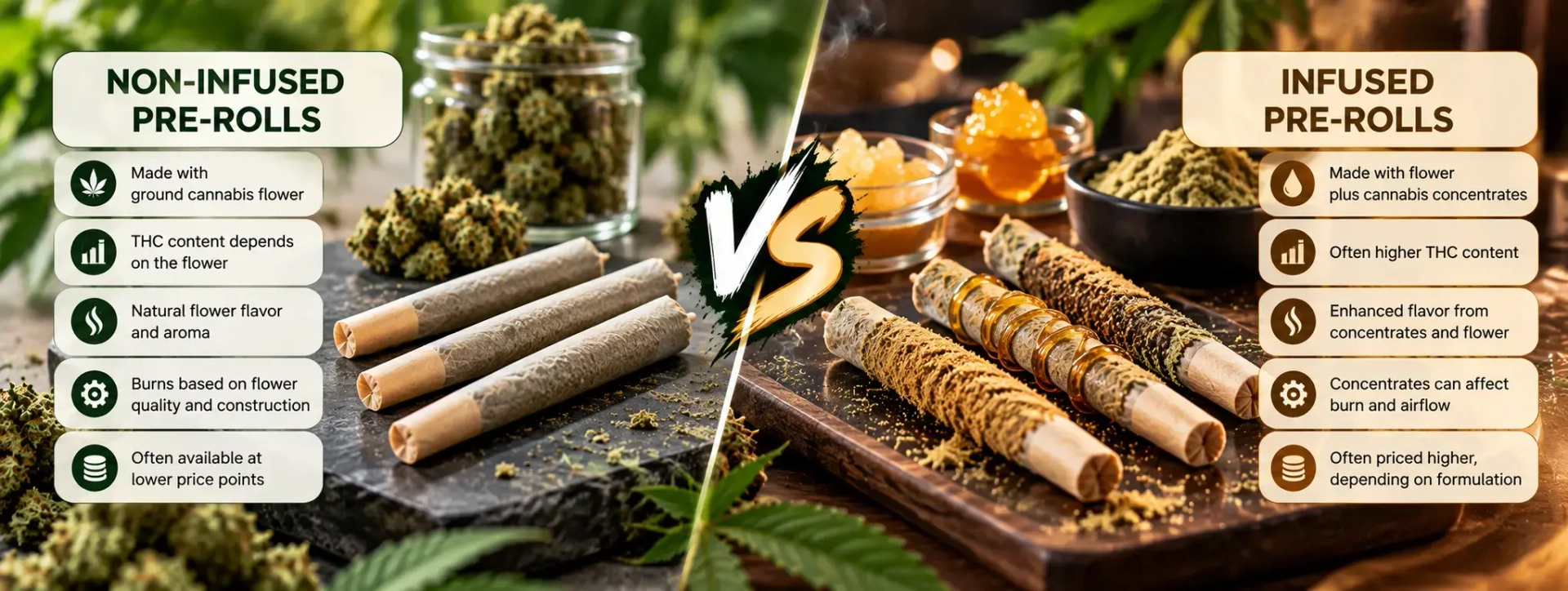
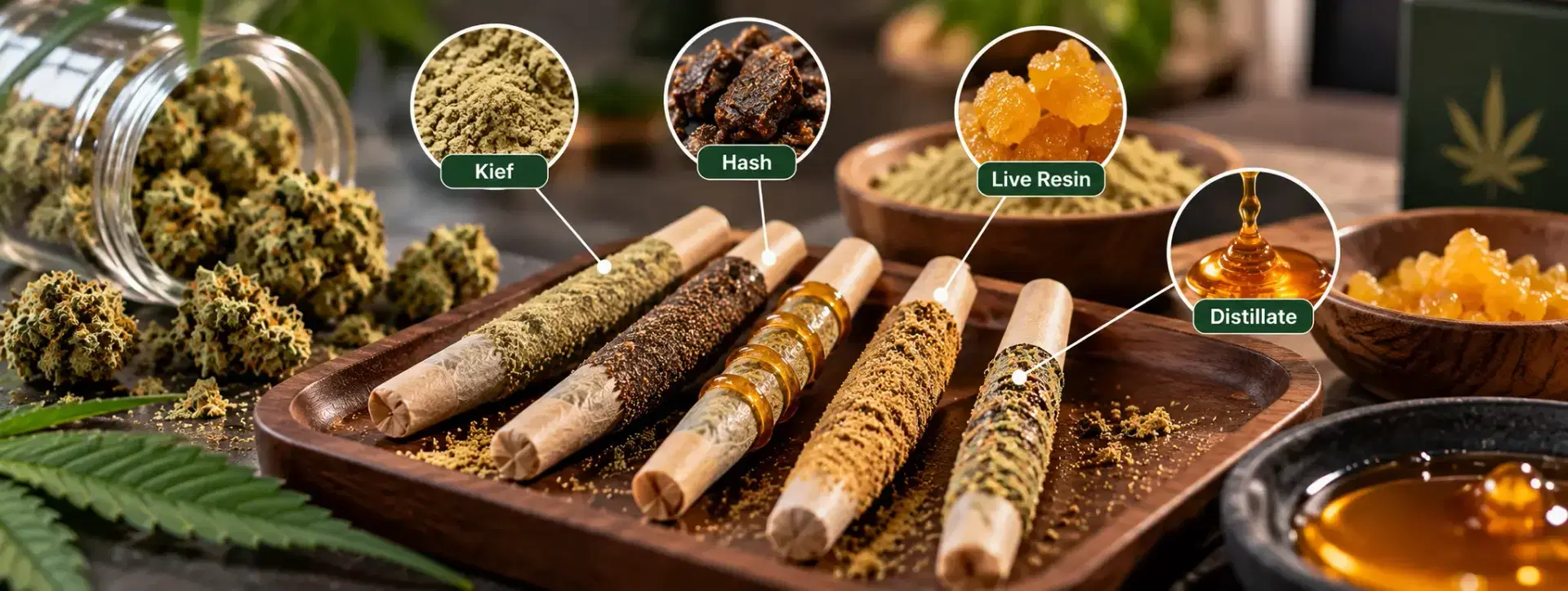
The word infused tells you something has been added to the cannabis flower, but it doesn’t tell you everything about the finished product. An infused pre-roll is a ready-to-smoke joint made with ground cannabis flower and added cannabis concentrate, such as hash, live resin, or distillate. The concentrate can change the product’s THC content, flavor, and overall characteristics, depending on the formulation. In this article, we’ll explain how infused pre-rolls differ, what the common types mean, and what to check before buying one. What Makes a Pre-Roll Infused? The difference comes down to what goes into the pre-rolled joints, not just what wraps around it. Classic pre-rolls contain ground cannabis flower , whereas infused pre-rolls combine flower with an added cannabis concentrate. Manufacturers may blend the concentrate into the flower, place it inside the joint, or coat the outside. These enhancements can change the finished product’s THC content and overall profile. Concentrates usually contain much higher THC levels than cannabis flower. For example, a 2025 study in Scientific Reports analyzed 277 retail flower and concentrate products purchased from 52 Colorado stores. The researchers found average labeled THC levels of 22.5% for flower and 73% for concentrates. However, the study examined only 11 pre-rolls and did not directly test finished infused pre-rolls, so those averages cannot predict the potency of a particular infused joint. The added concentrate and its amount matter, but so does the flower itself. A product’s final potency depends on its formulation, and the word infused alone won’t tell you how strong it is. Check the package’s cannabinoid information to compare products rather than relying on terms like enhanced or high potency. How Are Concentrates Added to Infused Pre-Rolls? The way a concentrate is added affects how an infused pre-roll is built, from its texture to the way the joint burns. Manufacturers generally use three approaches: mixing concentrate with ground flower, placing it inside the joint, or applying it to the outside. Some ready-made joints combine more than one method. Learn more: What Are Cannabis Concentrates? Mixing Concentrate with Cannabis Flower Some manufacturers blend concentrate directly into ground cannabis flower before filling a pre-roll cone or rolling paper. This distributes the added material throughout the flower rather than keeping it in one spot. The result depends on the concentrate’s consistency, the amount used, and how evenly the materials are combined. Placing Concentrate Inside the Joint Another method places concentrate in the center of the flower, often as a line or core. A hash hole, also called a donut joint, is a well-known example. It typically contains a core of hash surrounded by cannabis flower. As the joint burns, the concentrate can melt and create a different burn pattern from one made with flower alone. Coating the Outside of the Pre-Roll Some infused joints receive a layer of concentrate or kief on the outside. Kief consists of collected cannabis trichomes, which contain cannabinoids and aromatic compounds. An outer coating can change the pre-roll’s texture and add more cannabis material, but its effect on potency depends on the product’s formulation. Why does the method matter? A concentrate mixed throughout the flower differs from one concentrated in the center or applied to the exterior. However, the method alone cannot tell you how potent the finished pre-roll will be. Check the product label and available testing information for a clearer picture of its cannabinoid content. Learn more: How Are Pre-Rolls Made? What Types of Infused Pre-Rolls Are There? Infused pre-rolls vary by the concentrate used and how manufacturers add it to the flower. Some feature kief or hash, while others use extracts such as live resin, live rosin, wax, or distillate. You may also see names like diamond-infused pre-roll or hash hole, which describe a particular ingredient or construction rather than entirely separate product categories. Type What makes it different Kief-infused pre-rolls Use kief, a collection of cannabis trichomes rich in cannabinoids and aromatic compounds. Manufacturers may mix it with flower or apply it as an outer coating. Hash-infused pre-rolls Contain hash, a concentrate made from collected cannabis trichomes. Hash may be blended with flower or placed inside the joint. Live resin pre-rolls Include live resin, an extract made from fresh cannabis material and commonly associated with preserving a broader range of aromatic compounds. Live rosin pre-rolls Use live rosin, a solventless concentrate produced with heat and pressure from cannabis material. Wax or shatter-infused pre-rolls Contain concentrates with different textures. Wax is generally softer , while shatter typically has a firm, glass-like consistency. Distillate-infused pre-rolls Include distillate, a highly refined cannabis extract with a concentrated cannabinoid profile. Diamond-infused pre-rolls Contain THCA diamonds, a crystalline concentrate rich in THCA before heating. What About Hash Holes and Donut Joints? A hash hole, also called a donut joint, typically has a central core of hash surrounded by cannabis flower. As it burns, the melting concentrate can leave a hole through the center of the ash, creating the characteristic donut appearance. The name describes the joint's construction, not a separate type of concentrate. Keep in mind that these labels don't guarantee a specific THC level, flavor, or experience. The concentrate used, its amount, the flower, and the finished product's formulation all influence the result. Check the package for cannabinoid information rather than judging potency by the product name alone. Are Infused Pre-Rolls Stronger Than Regular Pre-Rolls? In short, yes. Infused pre-rolls can contain more THC than regular pre-rolls because they combine cannabis flower with added concentrate. However, the final potency depends on the type and amount of concentrate, the flower’s cannabinoid content, and the product’s formulation. Concentrates vary in potency, too. For context, the Washington State Liquor and Cannabis Board reports these general THC ranges: Wax, rosin, shatter, and hash oil: commonly 60% to 90% THC. Kief and hash: commonly 50% to 80% THC. These figures describe the concentrates themselves, not finished infused pre-rolls. Adding a concentrate within those ranges does not mean the entire joint will have the same THC percentage. To assess a specific product, check its labeled cannabinoid content rather than relying on terms like infused or high potency. For a closer look at the differences in ingredients, potency, and product features, see our guide to infused pre-rolls vs. non-infused pre-rolls . Are Infused Pre-Rolls Worth It? If you want to experience the effects of high-THC cannabis without the burden of rolling your own joint, infused pre-rolls may be worth considering. They combine ready-to-smoke convenience with added cannabis concentrate, which can increase the product's THC content. However, whether they're worth the price depends on the concentrate type, labeled THC content, and your preferences. A higher price or THC percentage doesn't automatically mean better quality or value. Before choosing an infused pre-roll, consider these factors: Price: Infused options may cost more because they contain added concentrate. Compare the price per pre-roll and the amount of product rather than assuming the more expensive option offers better value. Concentrate type: Live resin, live rosin, distillate, and hash have different characteristics. Check the listed ingredients to understand what the product contains. Labeled potency: Review the available THC information. A higher percentage doesn't automatically make a product a better fit for your preferences. Product details: Clear ingredient information and available testing results can help you make a more informed choice. Ultimately, an infused pre-roll isn't automatically a better choice than a regular one. Consider the price, ingredients, and product information together to decide whether the added concentrate is worth it for you. Are Infused Pre-Rolls Bad for You? Infused pre-rolls contain cannabis flower and added concentrate, which can increase THC exposure depending on the product's formulation. Higher THC exposure may increase the risk of unwanted effects, and smoking cannabis carries lung health risks regardless of whether a pre-roll is infused. Here are three key concerns to understand: Higher THC exposure: Concentrates can contain high levels of THC. The CDC notes that highly concentrated THC products are associated with more severe cannabis use disorder symptoms. Lung health: Smoking cannabis can harm lung tissue and expose you to toxins and irritants also found in tobacco smoke. It can contribute to coughing and bronchitis symptoms, according to the CDC's cannabis and lung health guidance . Impairment: THC can affect memory, attention, coordination, and judgment. It may also cause anxiety or paranoia in some people. Never drive after using cannabis; the CDC explains why . What should you keep in mind? An infused pre-roll's label doesn't tell you exactly how you'll respond. Check its labeled THC content, understand the potential risks, and remember that smoking either infused or regular pre-rolls can harm your lungs. What Should You Check Before Buying an Infused Pre-Roll? Before choosing an infused pre-roll, look beyond the strain name or THC percentage on the package. The concentrate, total cannabinoid content, and available testing information can tell you more about what you're buying. Clear product details also help you compare options without relying on labels like premium or high potency alone. Here are four things worth checking: THC content: Check the labeled THC amount and whether it refers to the entire pre-roll or a larger package. THC percentage and total THC in milligrams describe different things, so don't treat them as interchangeable. Type of concentrate: Look for ingredients such as live resin, live rosin, distillate, or hash. If the package lists the concentrate amount, use that information to understand the product's formulation. Batch and testing information: Check the batch or lot details and look for available test results or a certificate of analysis (COA). These can help you verify cannabinoid information and determine whether the product has undergone applicable testing. Product source and labeling: Buy from a licensed retailer where legal, and check that the package includes the required product information for your state. Why Finished-Product Testing Matters Testing the cannabis flower before adding concentrate doesn't necessarily establish the composition of the finished infused pre-roll. In May 2024, Michigan's Cannabis Regulatory Agency issued a recall and product advisory involving 1,098 infused pre-roll units because the affected products had not been tested after distillate and/or terpenes were added. The agency's official recall notice explains the specific issue. This Michigan case illustrates why testing the finished product matters. Requirements vary by state, so check your local regulations and the testing information available for the product you're considering. Find the Right Infused Pre-Rolls at JARS Cannabis If you're shopping for infused pre-rolls , our JARS Cannabis budtenders can help you explore the available options and product details. Depending on your local store's inventory, you may find ready-to-smoke joints infused with kief, hash, live resin, or other concentrates. At JARS, we value product transparency. You can use our lab test portal to look up available Certificates of Analysis (COAs) by entering the product's batch ID. These reports can show cannabinoid results, including THC, CBD, and CBG, along with other testing information when available. Check the report against the batch details on your package to make sure you're viewing the relevant results. Frequently Asked Questions About Infused Pre-Rolls 1. What Does Infused Mean in a Pre-Roll? An infused pre-roll is a ready-to-smoke joint made with cannabis flower and added concentrate, such as hash, kief, live resin, or distillate. The concentrate may be mixed with the flower, placed inside the joint, or applied to the outside. 2. Are All Infused Pre-Rolls High in THC? No. THC levels vary based on the concentrate, the amount added, the flower, and the product's formulation. Check the labeled cannabinoid content instead of assuming every infused pre-roll has the same potency. 3. Can Beginners Use Infused Pre-Rolls? Infused pre-rolls may be too potent for beginners, depending on their THC content. Concentrates can increase THC exposure and the risk of unwanted effects. Beginners should understand the product's potency and risks before considering use. 4. What Is the Difference Between a Hash Hole and a Regular Infused Pre-Roll? A hash hole, also called a donut joint, typically has a core of hash surrounded by cannabis flower. Other infused pre-rolls may mix concentrate throughout the flower or apply it to the outside. 5. Can You Tell How Much Concentrate Is in an Infused Pre-Roll? Not always. Some product labels disclose the concentrate type and amount, while others provide limited details. Check the package and any available certificate of analysis (COA), but remember that cannabinoid results don't always reveal the exact amount of concentrate added. 6. Do Infused Pre-Rolls Always Taste Stronger Than Regular Pre-Rolls? No. Flavor depends on the flower, concentrate, terpene profile, and formulation. Some infused pre-rolls may have a more pronounced aroma or taste, but the word infused alone doesn't guarantee a stronger flavor. References: 1. Giordano, Gregory, et al. “Accuracy of Labeled THC Potency across Flower and Concentrate Cannabis Products.” Scientific Reports, vol. 15, 2025, article 20822, https://doi.org/10.1038/s41598-025-03854-3 . 2. Washington State Liquor and Cannabis Board. “Understanding THC Concentration and Potency.” Washington State Liquor and Cannabis Board, https://lcb.wa.gov/education/understanding_thc_concentration_and_potency . 3. Centers for Disease Control and Prevention. “Cannabis Health Effects.” CDC, 16 Feb. 2024, https://www.cdc.gov/cannabis/health-effects/index.html . 4. Centers for Disease Control and Prevention. “Cannabis and Lung Health.” CDC, 15 Feb. 2024, https://www.cdc.gov/cannabis/health-effects/lung-health.html . 5. Centers for Disease Control and Prevention. “Cannabis and Driving.” CDC, https://www.cdc.gov/cannabis/health-effects/driving.html . 6. Michigan Cannabis Regulatory Agency. “Cannabis Regulatory Agency Issues Recall Bulletin and Product Advisory Bulletin.” Michigan Department of Licensing and Regulatory Affairs, 15 May 2024, https://www.michigan.gov/lara/news-releases/2024/05/15/cra-issues-recall-bulletin-and-product-advisory-bulletin .

JARS Team