
 Cannabis Concentrates Guides
What Is Live Rosin? Everything You Need to Know in 2026
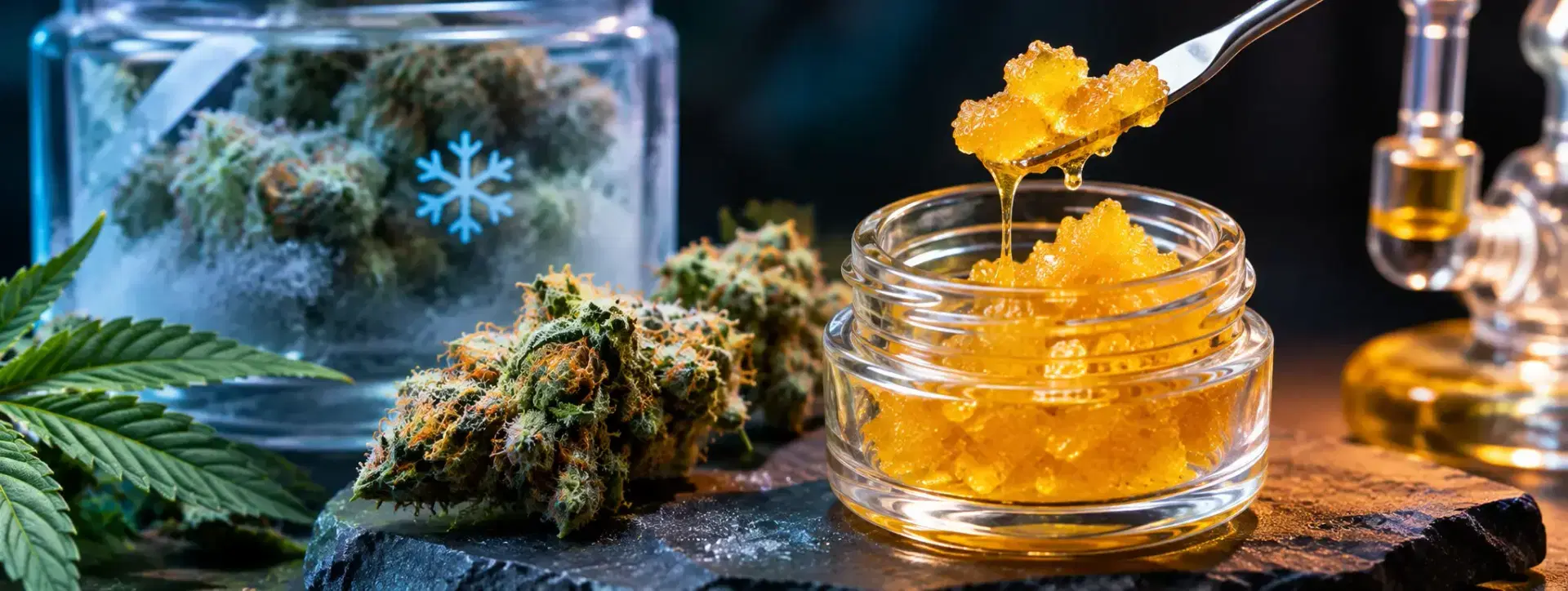
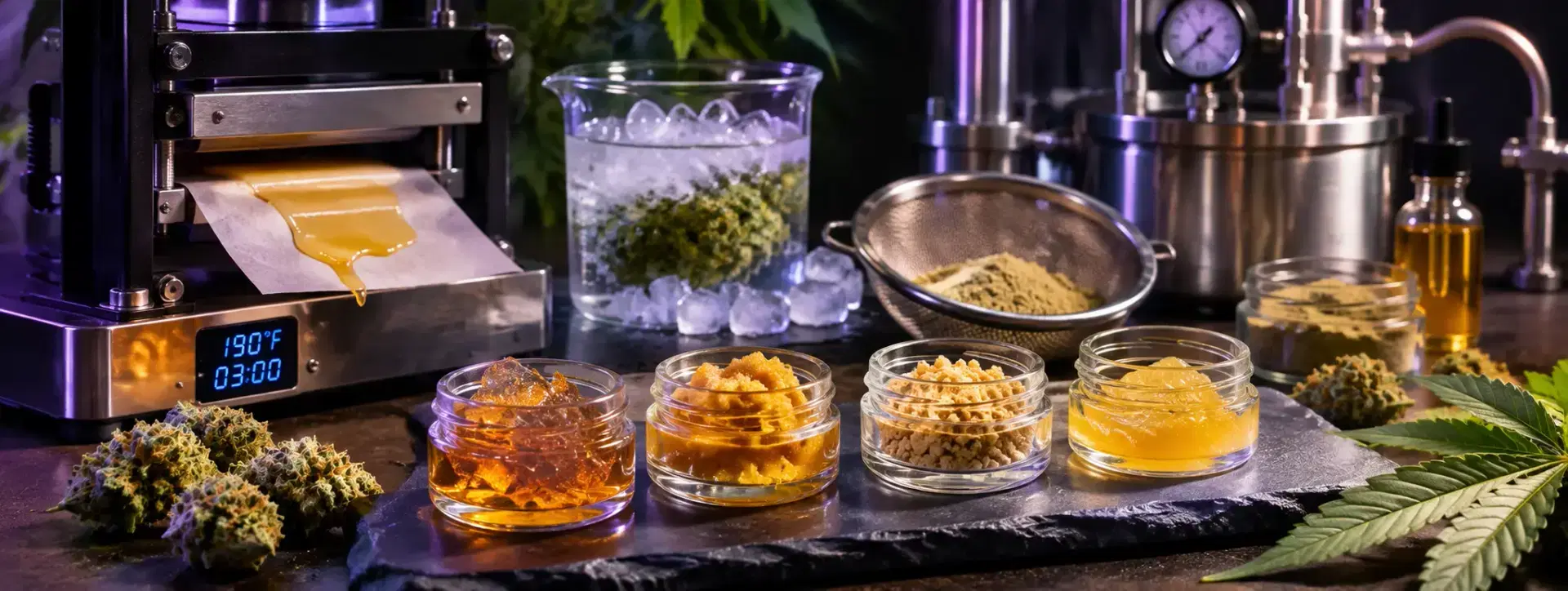
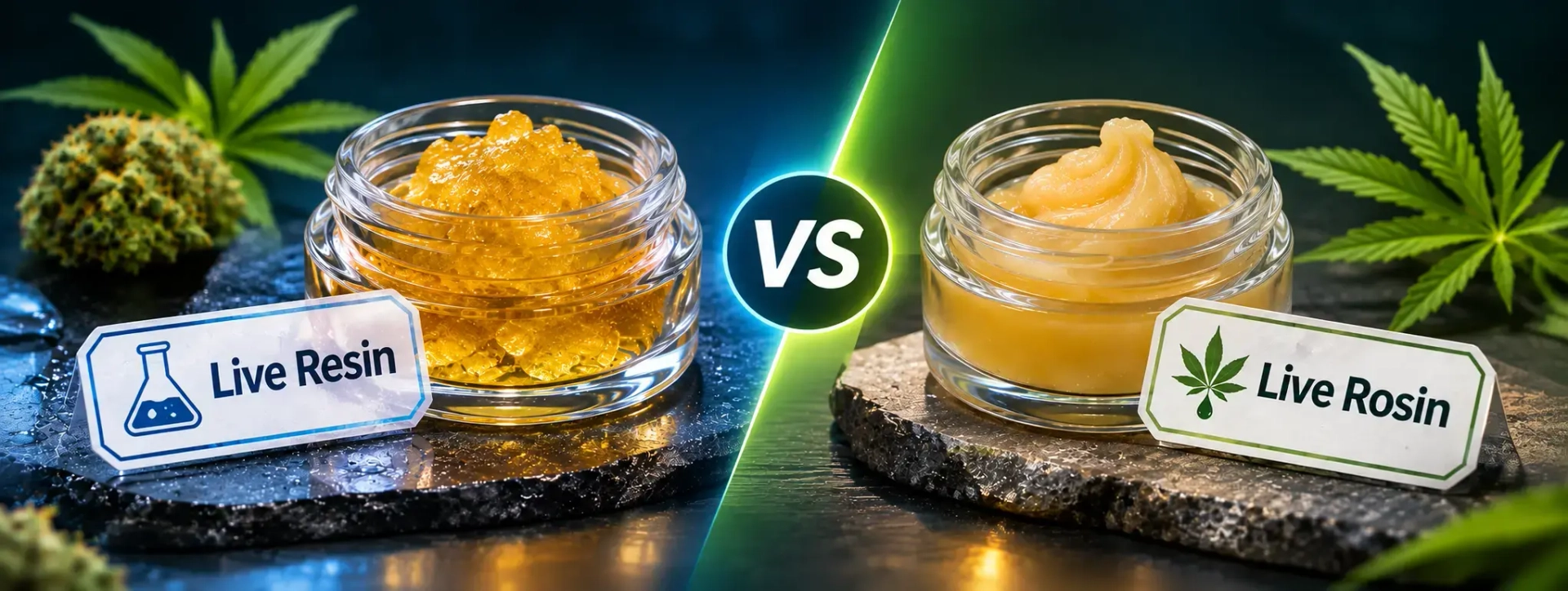
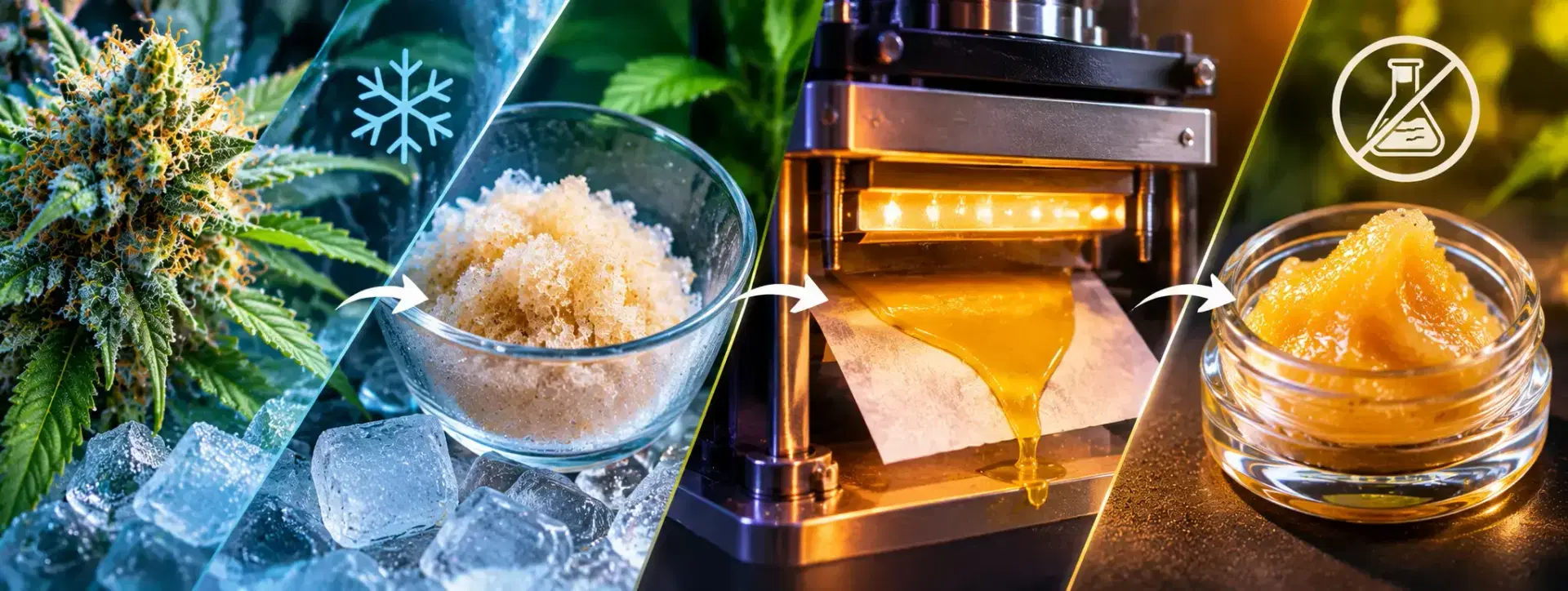
Live rosin is a solventless cannabis concentrate made by pressing resin-rich hash from fresh-frozen cannabis . Its defining feature starts with how producers handle the plant after harvest. Instead of drying and curing the flower first, they freeze it to help preserve its fresh chemical profile. They then separate the resin-rich trichomes and press the resulting hash with controlled heat and pressure. The result is a concentrated extract containing cannabinoids and terpenes from the original plant. Unlike traditional rosin, which can come from dried flower or hash, live rosin starts with fresh-frozen cannabis. It also differs from live resin , which uses solvent-based extraction. That distinction comes down to the starting material and how producers collect the resin. If you're new to concentrates, you can start by learning what cannabis concentrates are ! What Is Live Rosin Made From? Live rosin starts with two key components: fresh-frozen cannabis and its resin-producing trichomes . The flower provides the starting material, while the trichomes contain much of the plant's valuable resin. Producers separate these structures before pressing them into a concentrate. Understanding both helps explain what makes live rosin different. Fresh-Frozen Cannabis The word live refers to how producers handle cannabis after harvest. They freeze the freshly harvested plant material instead of drying and curing it first. This helps preserve a chemical profile closer to the plant's fresh state. It also gives producers the starting material needed for ice water hash extraction. The reason matters more than the name. Cannabis contains volatile aromatic compounds called terpenes, which can change or dissipate during drying, curing, and storage . Monoterpenes such as myrcene, limonene, and pinene are particularly prone to evaporation. Freezing slows many of these changes, but it does not preserve every compound perfectly. A 2026 study comparing cannabis flower drying methods found that freeze-drying preserved trichome structure and visual quality. However, it also caused substantial losses of volatile monoterpenes. The study examined dried flower, not live rosin production, so its findings should not be treated as a direct comparison of extraction methods. Still, it reinforces one important point: freezing or freeze-drying does not guarantee complete terpene preservation . Fresh-frozen cannabis also serves a specific purpose in production. Producers use it to make ice water hash, which they later press into rosin. They do not usually press the frozen flower directly. Trichomes and Cannabis Resin Trichomes are tiny structures on cannabis flowers that produce and store resin. They give mature flower its familiar frosted appearance. More importantly, their resin contains cannabinoids such as THCA and CBDA, along with terpenes and other plant compounds. Cannabis has several types of glandular trichomes, but capitate-stalked trichomes are especially important in resin production . They have a prominent stalk and a rounded glandular head. These structures are abundant on female cannabis flowers and contain high concentrations of cannabinoids. Smaller bulbous and capitate-sessile trichomes also occur across the plant. A 2021 review in Frontiers in Plant Science describes glandular trichomes as the main sites of cannabinoid production and storage. Research published in The Plant Journal also found that stalked trichomes on mature flowers contain higher cannabinoid levels than sessile trichomes. However, trichome development and chemical composition vary by cultivar and flower maturity. So, appearance alone cannot tell you exactly how much resin a plant will produce. This is why trichomes matter so much to live rosin makers. They want to separate these resin-filled structures from the surrounding plant material. The collected material becomes bubble hash, also known as ice water hash, before producers press it into rosin. How Is Live Rosin Made? Making live rosin involves more than pressing cannabis under heat. Producers first freeze freshly harvested flower, then separate its resin-rich trichomes using ice water. They carefully dry the collected hash before pressing it into a concentrate. Each stage affects the final product. Starting material, trichome maturity, moisture removal, filtration, and pressing conditions all play a role. Most importantly, live rosin is pressed from hash, not directly from frozen flower . Harvesting and Freezing Fresh Cannabis Live rosin production begins with freshly harvested cannabis. Producers handle the flower carefully and freeze it soon after harvest. This skips the traditional drying and curing stage before extraction. Why freeze it so early? Fresh cannabis contains delicate aromatic compounds, including volatile terpenes. These compounds can change or dissipate during post-harvest handling. Freezing slows many of these changes and helps maintain a profile closer to the freshly harvested plant. However, freezing does not lock in every compound or guarantee a particular flavor. Cultivar genetics, harvest timing, handling, and storage conditions still matter. The quality of the starting flower sets the foundation, but it does not determine the finished rosin on its own. Separating Trichomes Through Ice Water Hash Extraction Next, producers separate the trichomes from the frozen plant material. They use ice water, gentle agitation, and filtration instead of chemical extraction solvents. Cold conditions help make the resin glands more brittle, allowing them to detach from the plant material. The mixture then passes through filter bags fitted with different micron-sized mesh screens. Each screen separates particles based on size. Producers collect the resin-rich material and consolidate it into bubble hash, also called ice water hash. Micron measurements describe the openings in these screens, not the size or quality of the finished rosin. Producers may use several mesh sizes to separate different fractions. However, there is no single micron range that guarantees premium hash. Trichome maturity, resin quality, and the amount of unwanted plant material all affect the result. Collecting more hash does not automatically mean producing better live rosin. The goal is to collect resin-rich trichomes while limiting plant debris. Drying and Preparing the Hash After filtration, producers collect wet bubble hash. But it cannot go straight into the rosin press. The material still contains water, which needs to be removed before pressing and storage. Many producers use freeze-drying, also called lyophilization, to remove moisture under controlled conditions. The process freezes the material and lowers the surrounding pressure. This allows ice to turn directly into water vapor through a process called sublimation, rather than melting into liquid water first. It helps remove moisture without relying on prolonged exposure to heat. Some producers also break the wet hash into smaller pieces before drying. This can help moisture escape more evenly. Proper drying matters because trapped moisture can affect pressing and encourage microbial growth during storage. Research on cannabis post-harvest processing also shows why drying conditions deserve attention. A 2021 review in the Journal of Cannabis Research identifies temperature, humidity, airflow, and drying time as important factors in preserving cannabis compounds. However, much of that research examines cannabis flower rather than bubble hash specifically. It supports careful moisture control, but it does not establish one universal method for producing better live rosin. Pressing Hash into Live Rosin Once the bubble hash is properly dried, producers can press it into live rosin. They place the hash inside a fine-mesh filter bag, then apply controlled heat and mechanical pressure using a rosin press. The pressure releases resin from the collected trichomes, allowing it to flow out as a concentrated extract. Filter bag size matters here, too, but it serves a different purpose from the screens used during ice water extraction. The bag helps contain the hash while allowing the resin to flow through. Some commercial equipment guides recommend roughly 165°F to 195°F for pressing hash, but this is an illustrative range, not an industry-wide standard. The ideal conditions depend on the starting material, equipment, and desired consistency. The balance between heat and pressure matters. Excessive heat can cause volatile terpenes to evaporate and change the extract's aroma. However, lower temperatures do not automatically produce better rosin. Starting hash quality and pressing conditions both influence the result. The extract may come out with a fresh-pressed, sappy consistency. Producers can then handle and cure it further to create textures such as badder or jam. These finishes affect how the rosin looks and handles, but they do not change its basic extraction method. What Is the Difference Between Live Rosin and Regular Rosin? The biggest difference between live rosin and regular rosin is the cannabis used to make them. Live rosin starts with fresh-frozen cannabis, while regular rosin usually comes from dried flower or hash. Both use heat and pressure instead of chemical extraction solvents. However, their starting materials can affect the final aroma, texture, and chemical profile. Here's a closer look: Feature Live Rosin Regular Rosin Starting material Fresh-frozen cannabis Usually dried flower or hash Preparation Flower is first processed into hash Flower or prepared hash is pressed Extraction method Heat and pressure Heat and pressure Solvent use Solventless Solventless Final profile Influenced by fresh-frozen starting material Influenced by the dried flower or hash One detail often gets lost in this comparison: regular rosin isn't a precise technical category. People often use it to mean flower rosin pressed from dried cannabis. However, rosin can also come from dried hash, including dry sift and bubble hash. The starting material tells you more than the word regular. The starting material also helps explain the difference in production costs. Flower rosin can go straight into a press, so it skips the separate hash-making stage. Live rosin requires fresh-frozen cannabis, ice water separation, careful drying, and another pressing step. Producers also need to account for the material lost during each stage. These factors can make live rosin more labor-intensive and expensive to produce. The final texture and composition can differ, too. Pressing whole flower may carry more plant-derived material into the extract than pressing carefully separated hash. That can affect color, residue, and how the rosin behaves when heated. However, you shouldn't assume every live rosin product melts cleanly or every flower rosin leaves heavy residue. Starting material, filtration, and processing all matter. Learn more: Live Resin Vs. Live Resin What Is the Difference Between Live Rosin and Distillate? Live rosin and distillate are both cannabis concentrates, but their production goals are quite different. Live rosin is pressed from hash to retain a broader profile of compounds from its starting material. Distillate is refined to concentrate specific cannabinoids, often THC . Distillate production typically begins with solvent-based extraction. Producers then refine the extract through additional processing, including distillation. This separates and concentrates selected cannabinoids. It can also remove many of the original terpenes and other plant compounds. Some manufacturers add terpenes back afterward to create a particular aroma or flavor. Live rosin takes a less refined approach. Producers separate trichomes from fresh-frozen cannabis and press the resulting hash. The finished extract can retain naturally occurring cannabinoids and terpenes from the starting material. Their amounts still vary with the cultivar and production process. Feature Live Rosin Distillate Production Pressed from hash Extracted and further refined Extraction approach Solventless Typically solvent-based Main focus Retaining a broader plant-derived profile Concentrating selected cannabinoids Terpenes Naturally present, but amounts vary Often removed during refinement; may be added back Consistency Can range from buttery to saucy Often thick, oily, or viscous Cannabinoid profile Varies with the starting material Often concentrated in a target cannabinoid THC content Varies by product Often highly concentrated in THC Terpene source is another detail worth checking. Live rosin contains terpenes carried over from its cannabis starting material. Distillate products may use botanical terpenes from non-cannabis plants, cannabis-derived terpenes, or a combination. The product label or manufacturer can help clarify which type it contains. Added terpenes aren't automatically inferior, but they don't necessarily recreate the original plant's chemical profile. You may also hear the term entourage effect when people discuss full-spectrum extracts. It describes the proposed interaction between cannabinoids, terpenes, and other cannabis compounds. Some consumers prefer extracts with a broader plant-derived profile for this reason. However, scientists haven't established that these compounds always work together to produce stronger or better effects in humans. It's best to treat the entourage effect as a proposed explanation, not a guaranteed benefit of live rosin. Potency is another important distinction. Distillate often has a higher THC percentage because its production concentrates a specific cannabinoid. Live rosin can contain a broader mix of compounds, but its THC content varies. A higher THC percentage doesn't automatically mean a better product or predict someone's experience . The two concentrates reflect different production goals, so comparing them by THC alone misses much of the picture. Live Rosin vs. Hash Rosin: Are They the Same? Yes. Live rosin is a type of hash rosin, but not all hash rosin is live rosin . Both are made by pressing separated cannabis resin with heat and pressure. The difference comes down to the material used to make the hash. Live rosin starts with fresh-frozen cannabis. Producers separate its trichomes before pressing the resulting hash. Hash rosin is a broader term. It can come from hash made with fresh-frozen cannabis or from dried and cured flower. The hash itself can also be collected in different ways. Two common starting materials are: 1. Ice water hash (bubble hash) : Producers use cold water, agitation, and filtration to separate trichomes from plant material. 2. Dry sift : Producers use screens or mesh to separate resin-rich trichomes from dried cannabis without water. Both methods can produce hash for pressing. However, the starting material still determines whether the resulting rosin qualifies as live rosin. Dry sift made from dried flower, for example, can produce hash rosin, but it isn't live rosin. Feature Live Rosin Hash Rosin Starting material Fresh-frozen cannabis Fresh-frozen or dried cannabis Intermediate material Hash made from fresh-frozen cannabis Ice water hash or dry sift, among other hash types Pressing method Heat and pressure Heat and pressure Relationship A specific type of hash rosin Broader category that includes live rosin You may also see products labeled live hash rosin. The name emphasizes both parts of the process: producers make hash from fresh-frozen cannabis, then press it into rosin. It's useful terminology, but the label alone doesn't tell you everything about the product's quality. What Does Live Rosin Look Like? Live rosin doesn't have one standard look. Depending on the starting material and how it's handled after pressing, it can appear pale yellow, golden, or amber . Its consistency can range from glassy and sticky to soft, creamy, or syrupy. Some varieties even contain small, visible crystals . Color and texture tell you more about the product's consistency than its overall quality. A lighter shade doesn't automatically mean better rosin. Different cannabis cultivars naturally produce different resin colors, and processing conditions can change the final appearance. Heat, oxygen, and light exposure can also contribute to color changes over time. So, don't judge a jar by color alone. Look at its texture, storage conditions, product information, and available lab results. A clean-looking concentrate isn't necessarily free from contaminants, just as a darker shade doesn't automatically mean something is wrong. What Are the Different Types of Live Rosin? The different types of live rosin usually refer to their texture and post-press handling , not separate extraction methods. Producers can start with the same general hash rosin process and create different consistencies through curing and other finishing steps. Here are the forms you're most likely to encounter. You can also learn about the different types of concentrates if you're new! Fresh Press Live Rosin Fresh press is live rosin in its relatively unaltered state, straight after pressing. It often looks translucent or glassy, with a sticky, sap-like consistency. Depending on the product, it may also have a golden or pale amber color. This texture can change after pressing. Exposure to air, temperature changes, and time can affect its consistency. Fresh press may become cloudier or develop a softer texture as it ages. It also tends to be more sensitive to handling and storage than some cured forms. Cold Cure Live Rosin Cold cure starts as freshly pressed rosin, then undergoes a controlled curing process. Producers typically seal the extract in a container and allow its texture to develop under cool conditions. Over time, it often becomes thicker, softer, and more opaque. The finished product usually has a creamy or dough-like consistency. It may look similar to soft butter or frosting. Cold curing can also change how the extract handles, making it easier to scoop and work with. However, the exact texture depends on the starting rosin and the producer's process. Live Rosin Badder Live rosin badder has a soft, creamy consistency that resembles cake batter or whipped butter. It is usually opaque and easy to scoop, rather than sticky or glass-like. Its texture often develops through curing and controlled agitation or whipping. You may also see it labeled budder. These terms often describe similar creamy concentrate textures, although producers don't always use them consistently. Badder can be a result of cold curing, so the two labels aren't necessarily separate product categories. One describes a curing approach, while the other describes the resulting consistency. Live Rosin Jam Live rosin jam has a glossy, sticky consistency that resembles thick fruit preserves. It may contain small crystalline structures suspended in a terpene-rich liquid. Depending on the product, it can look translucent, golden, or amber. This texture develops as the extract's components separate and organize during post-processing. The visible crystals may contain THCA, while the surrounding liquid holds a mixture of terpenes and other compounds. However, not every jam has the same crystal size or liquid-to-solid ratio. Some products look almost entirely saucy, while others appear thicker and more crystalline. Live Rosin Diamonds Live rosin diamonds contain visible crystalline structures, often surrounded by a terpene-rich liquid. The crystals are typically associated with THCA, which can form a more solid structure under certain processing and storage conditions. The surrounding material gives the product a glossy, sauce-like appearance. The term live rosin diamonds isn't used consistently across the cannabis market. Some products use it to describe a crystal-rich rosin texture, while others may use similar names for different concentrate formats. Don't assume every product labeled diamonds follows the same production method. Check the product description to understand whether it is genuinely solventless rosin. How Strong Is Live Rosin? Live rosin is a highly concentrated cannabis extract, often containing substantially more THC than traditional flower. However, there is no fixed THC range for every live rosin product . Potency depends on the starting cannabis, extraction process, and finished product. The most reliable way to check is to review its label and Certificate of Analysis (COA). For context, Washington State's Liquor and Cannabis Board reports that cannabis concentrates generally contain around 60% to 90% THC . This range covers several concentrate types, not live rosin alone. A 2025 study published in Scientific Reports also found considerable variation across commercial cannabis products. The researchers tested 99 concentrates purchased from Colorado retailers and found differences between labeled and measured THC levels. So, don't assume every jar will fall within the same range. How Does Live Rosin Feel? The experience depends on several factors, including THC concentration, the amount consumed, individual tolerance, and the product's cannabinoid profile. Some consumers describe live rosin as a fuller experience with pronounced aroma and flavor. Others report feeling relaxed, euphoric, uplifted, or physically heavy . These descriptions reflect personal experiences, not effects guaranteed by the product. Cannabis affects people differently. According to the National Institutes of Health , THC can produce relaxation and euphoria, but it can also alter time perception, memory, coordination, and thinking. Higher amounts may cause anxiety, panic, or paranoia, particularly in people with limited cannabis experience. Consumers commonly report experiences such as: Relaxation: A feeling of physical ease or reduced tension. Euphoria: A noticeable lift in mood or sense of enjoyment. Altered perception: Changes in time perception, sensory awareness, or concentration. Heaviness or drowsiness: Some people describe feeling physically relaxed or sleepy. Anxiety or paranoia: Higher THC exposure can also cause racing thoughts, uneasiness, or panic. How Is Live Rosin Used? Live rosin is primarily used through dabbing and concentrate-compatible vaporizers . Some consumers also combine it with cannabis flower or use it in infused products. The right format depends on the product and the equipment designed for it. Here are the common ways live rosin appears in cannabis products: Dabbing: A dab rig heats a small amount of concentrate and turns it into an inhalable aerosol. Live rosin badder, jam, and fresh press are common formats used this way. Vaping: Concentrate-compatible vaporizers and certain cartridges are designed for rosin. Not every cannabis vape device can handle a sticky concentrate, so product and device compatibility matters. Adding to flower: Some consumers combine live rosin with ground flower in a bowl or joint. This creates a flower-and-concentrate product rather than a standard flower-only experience. Infused edibles: Live rosin can also be used in commercially prepared cannabis edibles. These products deliver THC through digestion rather than inhalation, so their onset and duration differ. What Should You Look for When Buying Live Rosin? A good-looking jar doesn't always mean good-quality rosin. Before shopping live rosin , look beyond the THC percentage and marketing claims. These details offer a better picture of what you're buying: 1. Check the Certificate of Analysis (COA): Review the cannabinoid profile and available contaminant testing. Look for batch-specific results from a licensed, independent laboratory. 2. Check the starting material: Look for products made from fresh-frozen cannabis. If the cultivar is listed, you can better understand the expected aroma and flavor profile. 3. Consider the texture: Fresh press, badder, and jam naturally look different. Check whether the consistency matches the product description rather than expecting every jar to look alike. 4. Pay attention to aroma: A noticeable, natural cannabis aroma can tell you something about its terpene profile. However, smell alone cannot confirm freshness or purity. 5. Look at storage and packaging: Properly sealed, temperature-appropriate storage helps protect delicate compounds. Check the package date and follow the manufacturer's storage guidance. One last thing: Don't judge live rosin by color or THC percentage alone. Neither tells the whole quality story. Explore Different Types of Concentrates at JARS JARS offers a variety of cannabis concentrates , including live resin, live rosin, RSO, shatter, and wax. Find a JARS location in Michigan , Arizona , or Colorado and explore the available selection in person. You can also browse products and order online. Every product is lab-tested, and you can review its Certificate of Analysis (COA) through the JARS product testing results portal . Live Rosin FAQS 1. Does Live Rosin Contain THC or THCA? Live rosin can contain both THC and THCA. The exact amounts depend on the product and its processing. A lab-tested Certificate of Analysis (COA) can show the cannabinoid profile of a specific batch. 2. Why Does Live Rosin Cost More? Live rosin often costs $30 to $80 per gram. Comparatively, it's pretty high because its production involves fresh-frozen cannabis, ice water hash extraction, careful drying, and controlled pressing. These steps require more time and starting material than some other extraction methods, which can increase production costs. 3. Does Live Rosin Need to Be Refrigerated? Refrigeration is commonly recommended to help preserve live rosin's texture and terpene profile. Heat, light, and air exposure can affect its quality. Follow the manufacturer's storage instructions and keep the container sealed between uses. 4. Is Live Rosin Stronger Than Cannabis Flower? Live rosin generally has a higher THC concentration than cannabis flower because extraction concentrates the plant's resin. However, actual potency varies by product. Check the COA for its cannabinoid content rather than assuming every live rosin product has the same strength. References 1. Tanney, Cailun A. S., et al. "Cannabis Glandular Trichomes: A Cellular Metabolite Factory." Frontiers in Plant Science , vol. 12, 2021, article 721986. https://doi.org/10.3389/fpls.2021.721986 2. Livingston, Samuel J., et al. "Cannabis Glandular Trichomes Alter Morphology and Metabolite Content during Flower Maturation." The Plant Journal , vol. 101, no. 1, 2020, pp. 37–56. https://doi.org/10.1111/tpj.14516 3. Pourseyed Lazarjani, Masoumeh, et al. "Processing and Extraction Methods of Medicinal Cannabis: A Narrative Review." Journal of Cannabis Research , vol. 3, 2021, article 32. https://doi.org/10.1186/s42238-021-00087-9 4. Washington State Liquor and Cannabis Board. "Understanding THC Concentration and Potency." Washington State Liquor and Cannabis Board , https://lcb.wa.gov/education/understanding_thc_concentration_and_potency 5. Giordano, Gregory, et al. "Accuracy of Labeled THC Potency across Flower and Concentrate Cannabis Products." Scientific Reports , vol. 15, 2025, article 20822. https://doi.org/10.1038/s41598-025-03854-3 6. National Institute on Drug Abuse. "Cannabis (Marijuana)." National Institute on Drug Abuse, National Institutes of Health , https://nida.nih.gov/research-topics/cannabis-marijuana

JARS Team