Blogs
History of Arcadia, Phoenix: From Citrus Groves to a Modern Neighborhood

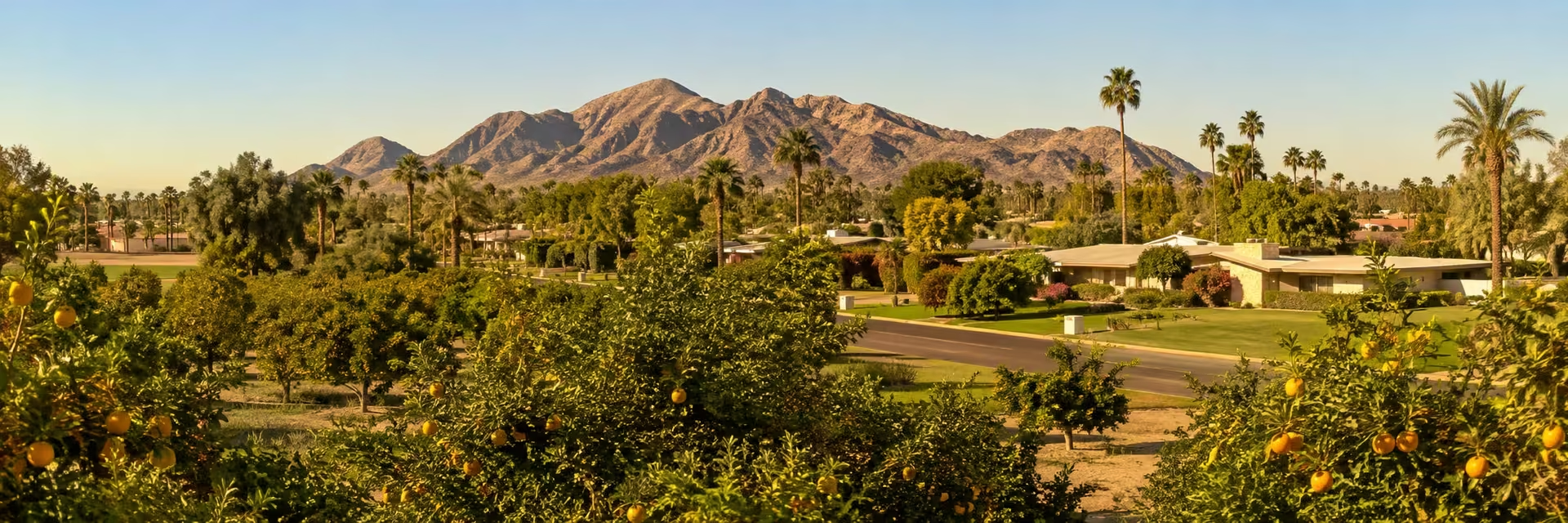
Arcadia's story starts long before today's restaurants, shops, and tree lined streets. What began as irrigated citrus land near Camelback Mountain gradually became one of Phoenix's most recognizable neighborhoods. Its early developers bet on water, agriculture, and spacious properties, shaping a landscape that still feels distinct today. Here's a closer look at how Arcadia grew from citrus groves and rural estates into the neighborhood we know today.
Before Arcadia Was a Neighborhood: The Land Around Camelback Mountain
Before Arcadia became a residential neighborhood, the area was largely agricultural land shaped by Phoenix's growing irrigation network. The Salt River Valley Reclamation Project made it possible to turn more desert land into productive farmland, while larger rural properties began emerging around Phoenix. This created an opportunity for developers to think beyond traditional farms and create spacious estate communities.
The land that would become Arcadia was especially well positioned between the Arizona Canal and Camelback Mountain. Citrus Homes, recorded in 1915, was the first subdivision within the area now commonly associated with Arcadia. Its 25 lots stretched north from the canal, giving future residents access to irrigated land and a landscape very different from the dense neighborhood seen today.
This early combination of irrigation, open land, and mountain scenery set the stage for Arcadia's next chapter. Developers soon began looking at the area not simply as farmland, but as a place where affluent buyers could own large rural properties and grow citrus at the same time.
Citrus Homes Came Before the Arcadia Name
Before the Arcadia subdivision was recorded, another development had already taken shape on the land. Citrus Homes was recorded in June 1915 by L.E. Froman, making it the first subdivision within the area now commonly associated with Arcadia. The 25 lots stretched north from the Arizona Canal toward Camelback Road, giving each property direct access to the canal along its southern edge.
That detail matters because it shows Arcadia's agricultural identity came before its name became widely associated with the neighborhood. The land was being divided into private properties at a time when irrigated farmland and spacious rural homesites were becoming increasingly attractive around Phoenix. In other words, the foundation for modern Arcadia was already being laid before the original Arcadia development appeared in 1919.
The citrus connection also became part of the area's character. Later developers continued promoting the larger Arcadia parcels for citrus cultivation, and mature citrus trees still help give parts of the neighborhood its distinctive look today. Local accounts of Arcadia's past describe generations growing up around orange groves and remembering the seasonal scent of citrus blossoms, showing how agriculture became more than an economic activity. It became part of the neighborhood's identity.
How Water Made Arcadia's Citrus Groves Possible
Citrus farming needed more than good soil and plenty of sunshine. The land also needed a dependable way to move water across the area. Because parts of Arcadia sat higher than the Arizona Canal, developers could not simply rely on gravity to irrigate every property. In 1919, they formed the Arcadia Water Company to address that challenge and support the area's growing agricultural plans.
The company developed a pumping system that helped move canal water onto the surrounding land. By 1924, about 15 miles of underground concrete irrigation pipe had been installed, creating a network that could serve the large properties being developed around Arcadia.
That infrastructure changed what was possible. Land that might otherwise have remained dry desert could support citrus groves, landscaped properties, and eventually homes. In many ways, Arcadia's early growth depended as much on its irrigation system as it did on the climate that made citrus cultivation attractive.
The 1919 Arcadia Subdivision Was Designed for Citrus and Space
When the original Arcadia subdivision was recorded in 1919, it was not designed like a typical residential neighborhood. The development divided the land into unusually large parcels, with lots generally ranging from about five to ten acres. The idea was to give buyers enough space for substantial homes while leaving room for citrus cultivation.
The development also targeted buyers who could afford this kind of property. Original restrictions required homes to cost at least $5,000, reinforcing the vision of Arcadia as a spacious, higher end rural estate community rather than a dense residential subdivision.
That original layout helps explain something you can still notice around Arcadia today. Mature landscaping, larger properties, and a sense of openness are not random features. They are remnants of a development model built around land, citrus, and space long before Arcadia became part of a growing Phoenix metropolitan area.
When Arcadia Was More Rural Estate Than Suburb
In its early years, Arcadia looked very different from the residential neighborhood we know today. Large parcels, citrus groves, and open land gave the area a rural estate character. Developers were intentionally creating a spacious setting where affluent buyers could own larger properties, build substantial homes, and grow citrus. The result was less like a typical suburb and more like a collection of private country estates near Phoenix.
The area's location added to its appeal. Irrigated land, proximity to Camelback Mountain, and access to Phoenix made Arcadia attractive to people looking for space without moving too far from the city. Early development also included several resorts and winter retreats, adding to the area's reputation as a desirable place to live and spend time.
This early identity helps explain why Arcadia still feels more open and established than many newer parts of Phoenix. Its large properties and mature landscaping were not simply later design choices. They grew out of the area's original rural estate model.
Arcadia's First Development Plan Did Not Go Exactly as Planned
The original Arcadia development faced a major setback by the middle of the 1920s. Financing for the first plan fell through, and the land was subsequently refinanced and divided into several new subdivisions between 1926 and 1931. These included Arcadia Estates, Arcadia Replatted, Glencoe Highlands, Alta Hacienda, and Hacienda Allenada.
The changes did not completely erase the original vision. Later developers continued to market the area toward buyers looking for spacious properties and an estate like setting. Some developments also raised the minimum cost of new homes. Arcadia Estates, for example, required homes to cost at least $10,000, compared with the $5,000 minimum established in the original 1919 Arcadia development.
So, Arcadia did not emerge from one uninterrupted development project. Several subdivisions gradually shaped the area, but they carried forward a similar idea: larger properties, attractive landscaping, citrus cultivation, and a quieter setting close to Phoenix.
From Citrus Orchards to Residential Arcadia
Arcadia's shift from agricultural land to residential neighborhood happened gradually. By the late 1920s, the area had become an important citrus growing region, even as new residential subdivisions were beginning to appear alongside the orchards. Agriculture and residential development existed side by side for years rather than changing overnight.
The bigger transformation came as Phoenix expanded after World War II. By the mid 1950s, residential development was reaching deeper into Arcadia, and former agricultural properties were being converted into housing. One example was Mountgrove, developed on land that had previously been the Sphinx Date Ranch. Many of its homes were built in 1954, with some of the property's mature date palms retained as part of the landscape.
As more homes replaced agricultural land, Arcadia's citrus economy gradually faded. Still, its influence did not disappear completely. Mature trees, spacious lots, established landscaping, and remnants of the area's irrigation system continue to reflect the landscape that existed before Arcadia became a fully residential neighborhood.
Why Citrus Trees Still Shape Arcadia's Identity
Citrus trees are more than a pleasant feature of Arcadia's landscape. They are a visible reminder of the neighborhood's agricultural past. Local history groups still describe the area's mature citrus trees as a defining part of its green, oasis like character, and community efforts such as citrus gleaning continue to connect residents with that history.
You can still see this connection in the mature trees scattered throughout the neighborhood. They sit alongside large yards, established landscaping, and older homes, creating a look that feels distinctly different from newer parts of Phoenix. The trees are essentially living pieces of Arcadia's earlier identity, when citrus groves were a major part of the local landscape.
The Architecture That Helped Define Modern Arcadia
As citrus land gradually gave way to residential development, the homes built in Arcadia created a new layer of neighborhood character. Mid century homes became especially important during the area's postwar growth, with designs that took advantage of larger lots, mature landscaping, and Arizona's indoor outdoor lifestyle. The quality of many homes from the late 1950s and early 1960s has also encouraged owners to renovate rather than replace them.
One of the area's best known architectural landmarks is the David and Gladys Wright House, designed by Frank Lloyd Wright in 1952. Its relationship with the surrounding desert, mountain, and landscape reflects a broader idea found throughout Arcadia: homes were designed to work with their setting rather than simply sit on a piece of land.
That mix of established homes, mature landscaping, and newer construction is part of what makes Arcadia visually distinctive today. The neighborhood has changed considerably since its citrus growing days, but its spacious layout still gives many properties a connection to the landscape that came before them.
Arcadia's Relationship with Camelback Mountain
Camelback Mountain has always been more than a backdrop for Arcadia. Its distinctive profile helped define the area's sense of place, and the mountain remains one of the clearest visual markers of the neighborhood. The Arcadia Camelback Mountain Neighborhood Association describes it as an icon of the area, while the mountain's preserve status now protects an important piece of the landscape for future generations.
The relationship works both ways. From Arcadia's streets and properties, Camelback Mountain provides a constant point of reference, while the neighborhood's mature trees and open residential landscape help frame views of the mountain. The Arizona Canal to the south and Camelback Mountain to the north have also helped give the area natural boundaries and contributed to its relatively insulated residential character.
That connection remains part of Arcadia's identity today. The same mountain that watched over the area's citrus groves now rises behind a mature residential neighborhood, linking two very different chapters of Arcadia's history.
What Happened to Old Arcadia?
Arcadia did not disappear when its citrus groves began giving way to homes. Instead, the landscape changed gradually as Phoenix expanded and new residential developments filled in former agricultural properties. By the mid 1950s, residential construction was reaching deeper into the area, including Mountgrove, which was built on part of the former Sphinx Date Ranch.
The change continued over the following decades. Some older homes were renovated, others were replaced, and remaining open parcels were developed. Yet the neighborhood retained several features of its earlier layout, including large lots, mature landscaping, citrus trees, and an irrigation system that still contributes to Arcadia's distinctive green character.
So, old Arcadia was not simply erased. Parts of it were absorbed into the neighborhood that came after it, leaving traces of its agricultural and rural estate past among today's homes and streets.
How Arcadia's History Still Appears Today
You don't need to visit a museum to see Arcadia's history. Look around the neighborhood and some of its older layers are still easy to spot. Mature citrus trees, broad residential lots, established landscaping, and sections of the historic irrigation network all reflect the area's years as an agricultural community.
The trees along Arcadia Drive offer another striking example. A stand of mature eucalyptus trees has long served as a recognizable gateway into the neighborhood, and local preservation efforts have focused on protecting historic trees and streetscapes. The neighborhood association has also supported citrus gleaning and continued work with the Arcadia Water Company, showing that the area's agricultural past still has a place in community life.
There are also historic buildings worth noticing. The Avery House, now known as Rafterhouse, dates to 1920 and is listed on both the National Register of Historic Places and the Phoenix Historic Property Register. Its original owner, Frank Avery, was involved in Phoenix's citrus industry, making the property another link between Arcadia's early agricultural economy and its present day landscape.
Exploring Modern Arcadia Through Its History
Today, Arcadia feels much more like a mature Phoenix neighborhood than the rural estate community envisioned by its early developers. Yet the old landscape still helps explain what makes the area distinctive. The generous lots, mature greenery, citrus trees, canals, and mountain views all connect the modern neighborhood to the land that came before it.
That connection is worth keeping in mind as you explore Arcadia. A walk along the canal, a drive past older homes, or a stop at one of the neighborhood's local businesses can reveal small pieces of a much longer story. Even the modern businesses and services around the neighborhood are part of its latest chapter, building on a community that has been changing for more than a century.
If you're exploring the area today, you can also find local businesses serving Arcadia residents and visitors, including JARS Cannabis Arcadia, a licensed cannabis retailer for adults 21 and older. It is one small example of how the neighborhood continues to evolve while retaining the character built through its agricultural, residential, and community history.
FAQs About the History of Arcadia, Phoenix
When was Arcadia, Phoenix established?
The original Arcadia subdivision was recorded in 1919. However, development in the area began earlier, with Citrus Homes recorded in 1915.
Was Arcadia originally a citrus farming area?
Yes. Arcadia became an important citrus growing area, with early developers dividing large parcels for both residential estates and citrus cultivation.
Why was the Arcadia Water Company created?
The Arcadia Water Company was formed in 1919 to help bring irrigation water to the area's higher elevation land. Its infrastructure helped make citrus cultivation possible across the developing community.
What was the original Arcadia subdivision like?
The original subdivision featured unusually large lots, generally ranging from five to 10 acres. Developers envisioned spacious rural estates where buyers could build homes and grow citrus.
When did Arcadia change from citrus groves to a residential neighborhood?
The transition happened gradually. Residential development accelerated after World War II, particularly during the 1950s, as Phoenix expanded and former agricultural properties were converted into residential neighborhoods.
Are there still signs of Arcadia's citrus growing history today?
Yes. Mature citrus trees, established landscaping, large residential lots, irrigation features, and historic properties still reflect Arcadia's agricultural past.