
 Flower Guide
How to Evaluate Cannabis Flower Quality
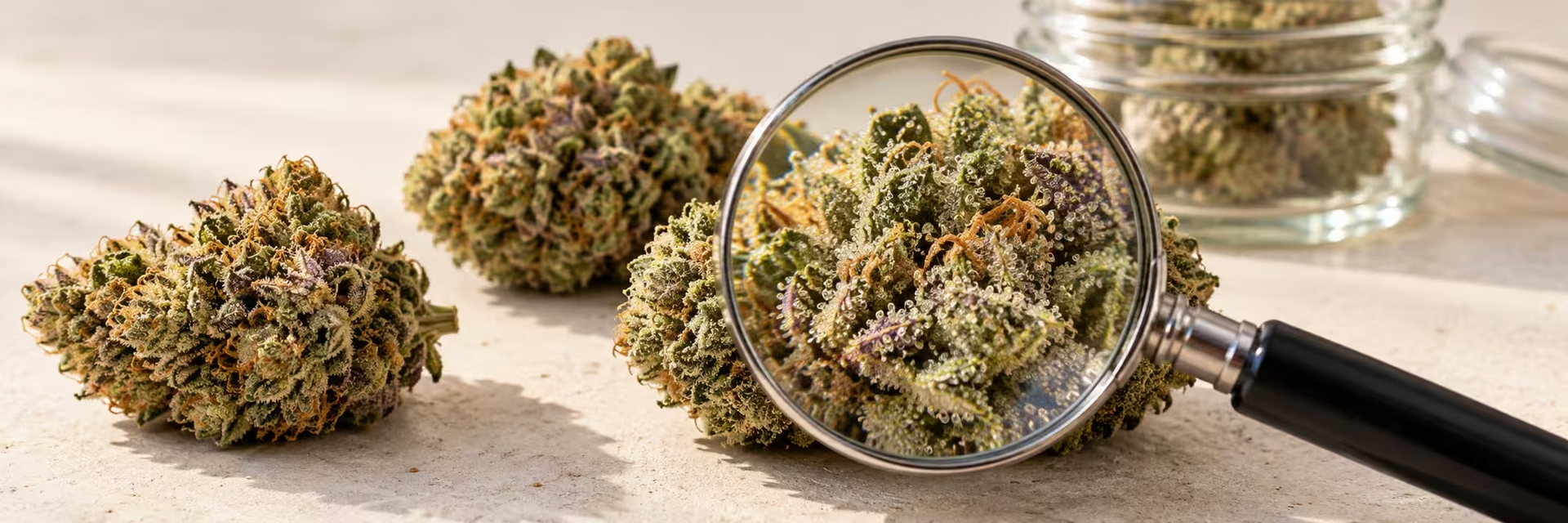
Not sure if your cannabis flower is good quality? Look beyond the THC percentage and frosty appearance. To evaluate cannabis flower quality, check its appearance, aroma, feel, freshness, and product information. Also watch for signs of mold or age. No single clue settles it, so weigh the signs together before you buy. Cannabis Flower Quality Checklist Use this quick checklist when evaluating cannabis flower. Smell and feel are easiest to check once the package is open. If it's sealed, rely on the label, package date, and lab results, and ask a budtender for help. 1. Safety: Check for fuzzy, web-like, or unusual patches. 2. Look: Expect whole buds, clean trim, and minimal stems or seeds. 3. Smell: Expect a clear, distinct aroma without musty, hay-like, or unusual odors. 4. Feel: Expect flower that is neither crumbly and overly dry nor damp. 5. Freshness: Check the package date and look for signs of aging or poor storage. 6. Label and lab results: Check batch information, cannabinoid and terpene details, and available contaminant testing. If a product raises a safety concern, skip it. If several quality cues seem off, compare another product. What Does Good Cannabis Flower Look Like? Good flower often looks well handled, with intact buds, clean trim, natural color, and no obvious contamination. Size, shape, and density can vary by strain or cultivar . Focus on the condition of the flower rather than one ideal appearance. Buds and Trim Look for whole, defined buds rather than heavily crumbled pieces or powder at the bottom of the package. The trim should be clean, with minimal stems, seeds, and loose plant material. Color Cannabis flower can be green, purple, or orange-tinged depending on the strain. Color alone doesn't tell you the quality. Look for consistent, natural-looking color and be cautious about unusual discoloration. Gray or white fuzzy patches can be a sign of mold. See the How to Tell if Weed Has Mold section below. Trichomes Trichomes are tiny, resin-producing structures that contain cannabinoids and terpenes. Up close, they give buds a frosty look. Look for trichome coverage that appears intact rather than heavily disturbed or missing in areas. Trichomes look like tiny crystals, while mold can look fuzzy or web-like. More trichomes don't automatically mean better flower, as the myths section explains. How Should Good Cannabis Flower Smell? Good cannabis flower has a clear, distinct aroma that fits its strain. You may notice citrus, pine, fruit, earth, spice, or floral notes. Some strains can also smell gassy or skunky, which is normal. These scents come from terpenes and other volatile compounds. Be cautious if you notice: • A faint or hay-like smell: This can be a sign of older flower or changes from drying and storage. • A musty or mildew-like smell: This can be a warning sign of mold. • A sharp ammonia smell: This can point to problems with curing, moisture, or storage. Smell is easiest to judge when you can open the package or use a sample jar, if your store offers one. If the flower is sealed, ask a budtender about its aroma and product history. A strong aroma is useful information, but it does not prove overall quality. How Should Good Cannabis Flower Feel? Once the package is open, good flower should feel slightly springy and may have some natural stickiness. It should break apart with gentle pressure rather than immediately turning to dust. The main distinction is between too dry and too damp : • Too dry: The buds feel brittle and crumble easily. Older or poorly stored flower may also have a flat aroma and harsher smoke. • Too damp: The flower feels wet, soggy, or unusually clammy. Excess moisture can create conditions that support mold growth. If damp flower also has a musty smell or visible fuzzy growth। How to Tell If Cannabis Flower Is Fresh Fresh flower has a distinct aroma and balanced texture, as covered above. Next, check the package information and storage . • Dates: Check the label for a harvest, package, or expiration date, if provided. Requirements vary by state. • Storage: Heat, light, air, and moisture can affect cannabis over time. A newer package isn't automatically fresher if it was stored poorly. Stale flower is mainly a quality issue , not automatically a safety issue. It may have a flatter aroma or harsher smoke. If it smells musty or shows possible mold, see the next section. Learn more : How to store cannabis flower How to Tell if Weed Has Mold Moldy weed can be difficult to identify from the surface alone. Dense buds can also make some areas harder to inspect. Mold is often confused with trichomes, so here's how they compare: Trichomes Possible mold Appearance Tiny, crystal-like structures with a shiny appearance Fuzzy, cottony, powdery, or web-like growth Pattern Often appears as resin coverage across the flower May appear in irregular patches Smell Contributes to the flower's normal aroma May have a musty or mildew-like odor You can't confirm mold by sight or smell alone. If you suspect mold, don't consume the flower . Keep the package and batch information, then contact the store where you bought it. When available, check the COA for microbial testing results relevant to that product. How to Read the Label and Lab Results The label and lab results show what is in the flower and whether it was tested. Labels typically list the brand, strain, weight, batch number, package date, and cannabinoid percentages . Many also include a QR code that links to the lab report. Requirements vary by state. THC, THCA, and Terpenes Flower labels often list both THC and THCA . THCA is the acidic form found in raw cannabis flower. When heated, some THCA converts to THC, so total THC estimates the flower's potential THC content. A common calculation is: Total THC = THC + (THCA × 0.877) Higher potency does not mean better quality, as the myths section explains. Terpenes contribute to cannabis aroma and flavor. Some labels list total terpenes or individual terpenes, while the COA may provide a more detailed profile. Use this information to compare products and connect the lab results with the flower's actual aroma. How to Read a Cannabis Certificate of Analysis (COA) A Certificate of Analysis (COA) is a laboratory report for a specific cannabis batch. You can usually find it through the QR code on the package, the retailer's online menu, or by asking a budtender. When you find the COA, check: • Batch match: The batch or lot number matches the package you are buying. • Lab and date: The testing laboratory and test date are listed. • Cannabinoids: Compare the reported THCA, THC, and total THC with the package label. • Terpenes: Review the listed terpenes and their reported amounts. • Safety testing: Look for passing results for pesticides, heavy metals, and microbial contaminants. Moisture or water activity may also be reported where tested. ND means “not detected.” A COA tests a sample from a specific batch, so it cannot show how the flower was stored after testing. Use it alongside the package date, smell, feel, and appearance when evaluating the flower. Common Myths About Flower Quality Some flower characteristics get treated like shortcuts for quality. THC percentage, trichome coverage, color, and aroma can all provide useful clues. However, none gives you the full picture on its own. Does Higher THC Mean Better Flower? No. THC percentage measures potency, not overall flower quality. Two flowers with similar THC levels can differ in aroma, freshness, texture, terpene profile, and appearance. Likewise, a lower THC flower can still have characteristics you value. Instead of using THC as your quality score, compare it with the rest of the product information. Consider the cannabinoid profile, terpene data, package date, lab results, and condition of the flower. Do More Trichomes Mean Better Flower? Not necessarily. Trichomes contain cannabinoids and terpenes , so visible trichome development can tell you something about the flower. It does not provide a complete quality assessment. Look for trichomes that appear intact and evenly distributed rather than simply counting how frosty the buds look. Handling, storage, aroma, texture, and lab results can tell you more about the product as a whole. Do Color or Strong Smell Mean Better Flower? No. Color and aroma are useful characteristics, but neither works as a standalone quality score. Healthy cannabis flower can show different shades of green, purple, and orange depending on the cultivar and growing conditions. Strong aroma can also reflect a rich mix of volatile compounds, but more intense does not automatically mean higher quality . Pay attention to unusual changes instead. Musty odors, fuzzy growth, or unusual discoloration can signal a problem. Otherwise, use color and aroma alongside texture, freshness, and product information. Common Myths About Cannabis Flower Quality Shoppers often rely on THC percentage, frosty buds, color, and smell because they are the easiest things to see. Each can offer a useful clue, but none measures flower quality by itself. Does Higher THC Mean Better Flower? No. THC percentage shows how potent the flower is , not how well it was dried, cured, or stored. Two flowers with the same THC level can still differ in aroma, freshness, and texture. Use THC to find a potency level that fits your preferences. Then judge quality by the flower's condition, aroma, and freshness. Do More Trichomes Mean Better Flower? Not necessarily. A frosty appearance does not guarantee fresh or well cured flower . Trichomes can also be lost through handling and processing. Instead of counting trichomes, pay attention to whether the flower smells fresh and has a balanced texture. Those clues can reveal problems that appearance alone may hide. Do Color or Strong Smell Mean Better Flower? No. Color mostly reflects the cultivar and growing conditions , so purple flower is not automatically better than green flower. Smell works differently. The type and character of the aroma matter more than how intense it is. A strong musty or ammonia smell can still be a warning sign. Is Expensive Cannabis Flower Better? Not necessarily. Price depends on brand, cultivation method such as indoor, greenhouse, or outdoor, potency, batch size, and packaging. A higher price does not guarantee better flower. A higher priced option may offer something you prefer, such as a distinctive aroma or small batch flower. A lower priced option can still be fresh and well handled. Compare price per gram instead of the sticker price, since package sizes differ. For example, 3.5 grams for $35 works out to $10 per gram. If the price gap is large, ask what the extra cost gets you. A very low price on flower that smells faint or feels dry can point to age. Terms such as “top shelf” are also marketing labels, not a universal quality grade. Questions to Ask a Budtender If you cannot inspect the flower before you buy, a budtender can fill in the gaps. You do not need to know cannabis terminology. Try asking: • When was this packaged, and how long has it been in stock? This helps you compare the age of different options. • What does it smell like? Ask about the actual aroma and whether a sample jar is available, if the store offers one. • Can I see the lab results or COA? This lets you check the cannabinoid and safety testing. • How does it compare with this other flower? Ask about differences in aroma, potency, and price. • What would you recommend at this price? This helps you compare options without assuming the most expensive flower is the best fit. Tell the budtender what matters most to you, whether that is aroma, potency, or value . They can then narrow the choices around your priority. Shop Cannabis Flower at JARS Ready to put these tips to use? Shop cannabis flower at JARS Cannabis, with dispensaries in Michigan, Arizona, and Colorado. Browse flower online, check package details and lab results on the menu, and ask our budtenders to help you compare options in-store. Cannabis Flower Quality FAQs Can You See Pesticides or Other Contaminants? No. You cannot reliably identify pesticides, heavy metals, microbial contaminants, or other contaminants by looking at or smelling cannabis flower. Check the product's Certificate of Analysis (COA) for applicable safety testing, and ask the retailer if you cannot find the lab results. Can Cannabis Flower Go Bad? Yes. Cannabis flower can lose quality over time, especially when exposed to heat, light, air, or excess moisture. Older flower may become dry, lose aroma, or develop a flatter taste. If you notice mold, unusual growth, or a musty odor, do not consume it. Why Is My Flower Harsh? Harsh flower can have several causes, including drying, curing, storage, or excessive heat during use. Very dry or poorly stored flower may also produce a rougher smoking experience. If the flower is harsh, check its texture, package date, storage history, and how you are consuming it before assuming the flower itself is the problem. Where Can You Find Quality Cannabis Flower Near You? Look for a licensed cannabis retailer that provides clear product information, including package details, cannabinoid and terpene data, and available lab results. A knowledgeable budtender can also help you compare freshness, aroma, potency, and price. Use the evaluation steps in this guide rather than relying on a “top shelf” label alone.

JARS Team