

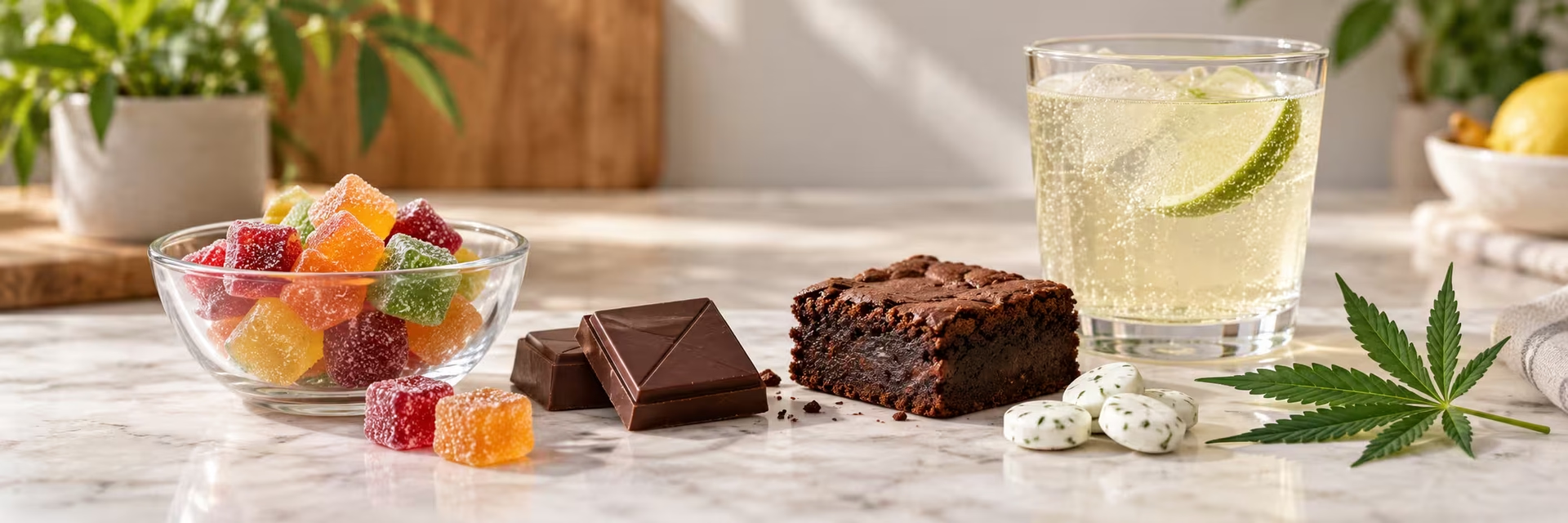
 Edibles Guide
How Long Does It Take for Edibles to Kick In?
Edibles usually take 30 minutes to 2 hours to produce noticeable effects . The timing varies because THC has to pass through the digestive system before it reaches the bloodstream. Research shows that oral THC effects can continue building after the first noticeable effects, so feeling little or nothing early on does not necessarily mean the edible is not working. That delay is the most important part of understanding edibles. With inhaled cannabis, effects can appear quickly. With an edible, the experience develops more gradually, and the strongest effects may arrive well after the first signs. How Long Do Edibles Take to Kick In? Most edible cannabis products begin producing noticeable effects within 30 minutes to 2 hours after consumption. The exact timing depends on the product, dose, food in your stomach, individual metabolism, and other factors. Because the onset can be delayed, taking more before the first dose has taken effect can result in stronger effects than expected. A controlled study of oral cannabis found that measurable pharmacodynamic effects did not appear until 30 to 60 minutes after ingestion, while peak effects occurred around 1.5 to 3 hours after administration. That research helps explain why the answer is not simply "30 minutes." For some people, 30 minutes may be enough to notice an effect. For others, the edible may still be building toward its peak. Edible Timeline at a Glance Time after eating an edible What may happen First 30 minutes Effects may not be noticeable yet. 30 minutes to 2 hours Noticeable effects may begin. About 1.5 to 3 hours Effects may reach their strongest point, based on controlled research. Several hours afterward Effects can continue, with duration varying by dose, product, and person. These are research based ranges, not a guaranteed schedule for every person. The CDC states that edible cannabis can take 30 minutes to 2 hours to produce intoxicating effects, while controlled research 2020 published by the National Library of Medicine has found peak subjective effects around 1.5 to 3 hours after oral administration. Why Do Edibles Take So Long to Work? Edibles take longer because orally consumed THC must be absorbed through the digestive system and processed by the liver before its effects become noticeable. This is different from inhaled cannabis, where THC enters the bloodstream through the lungs and reaches the circulation much more quickly. The liver also converts THC into metabolites, including 11-hydroxy-THC (11-OH-THC). Research on oral cannabis shows that THC and 11-OH-THC follow different blood concentration patterns than they do after inhalation, which contributes to the distinct timing of edible cannabis. This means the edible experience has two separate questions: When does it start? Usually within 30 minutes to 2 hours . When is it strongest? Controlled research has found peak subjective effects around 1.5 to 3 hours after ingestion. Those two points are not the same. That distinction is important when deciding whether an edible is "working." What Does the Research Say About Edible Onset?? Several human studies show why edible timing cannot be reduced to one exact number. According to a study indexed by the National Library of Medicine , researchers gave healthy adults cannabis brownies containing different THC doses and monitored blood cannabinoids, subjective effects, and cognitive performance. The study found that THC was generally first detected in whole blood about 0.5 to 2 hours after consumption, while subjective and cognitive effects generally peaked around 1.5 to 3 hours and lasted 6 to 8 hours in that study . Another controlled study , also indexed by the National Library of Medicine, found that pharmacodynamic effects did not appear until 30 to 60 minutes after oral cannabis ingestion and reached peak levels around 1.5 to 3 hours . A systematic review of 26 human studies found substantial variability in oral THC absorption. The review concluded that oral THC has a delayed and highly variable pharmacokinetic profile, with differences depending on the formulation and other factors. Together, these findings point to a useful conclusion: there is a normal range for edible onset, but there is no universal minute when every edible will kick in. Why Can the Same Edible Feel Different From One Day to Another? The timing and intensity of an edible can change because THC absorption is affected by the product, food, dose, metabolism, and individual differences. Research on oral THC shows substantial variation between people and between formulations, so the same labeled amount does not guarantee an identical experience every time. Several factors matter. The Food in Your Stomach Food can change how orally consumed THC is absorbed. In a controlled study of 28 healthy adults , researchers compared oral THC capsules taken while fasting with the same doses taken after a high fat meal. The meal significantly delayed the time needed to reach peak plasma THC and increased overall THC exposure. For the 5 mg and 10 mg THC doses tested in that study, the time to peak THC concentration increased by about 3.5 times when the capsules were taken after the high fat meal. That does not mean eating a meal will always make a cannabis edible take longer to work. The study used THC capsules and a specific high fat meal, so its findings should not automatically be applied to every gummy, chocolate, beverage, or baked edible. The broader takeaway is simpler: what is in your stomach can affect the timing and absorption of oral THC . The Edible Formulation Different edible formulations can produce different THC absorption patterns. A systematic review found that oral THC pharmacokinetics vary between formulations, including capsules, tablets, oils, brownies, cookies, and other preparations. Baked goods showed particularly variable pharmacokinetic results across the studies reviewed. That is one reason a gummy and a brownie should not automatically be expected to produce exactly the same timeline. The THC Amount The amount of THC affects the intensity of the experience, but a higher THC amount does not create a simple "faster onset" rule. Controlled studies have found dose related changes in subjective effects and cognitive performance, while the timing of absorption remains variable. For that reason, THC content is better understood as one factor affecting the experience rather than a stopwatch for onset. Individual Differences People can respond differently to the same oral THC dose. Differences in metabolism, previous cannabis exposure, food intake, formulation, and other biological factors can contribute to variation in THC absorption and effects. A systematic review of oral THC research found substantial variability across both participants and formulations. This is why another person's experience is not a reliable timer for your own edible. What If an Edible Hasn't Kicked in After an Hour? An edible that has not produced noticeable effects after an hour may still be taking effect normally. The CDC reports that edible cannabis can take 30 minutes to 2 hours to produce intoxicating effects, and controlled research has found that peak effects can occur later. This is where patience matters. If someone expects an edible to work like inhaled cannabis, the delay can be easy to misread. They may conclude that the first serving was ineffective even though THC absorption is still developing. The safer interpretation is that one hour is still within the expected onset window. Should You Take More If You Don't Feel the Edible Yet? Do not assume an edible has failed simply because you do not feel it yet. Edible cannabis can take up to 2 hours to produce noticeable intoxicating effects, and peak effects may occur later. Taking additional THC before the first serving has fully developed can cause the effects of multiple servings to overlap. The delayed onset is one reason the CDC identifies edibles as having a greater poisoning risk than smoked cannabis. A person may consume more THC before realizing that the original edible is already taking effect. If you are using a regulated cannabis product, follow its labeled serving information and give the initial serving adequate time to take effect. Does Eating an Edible on an Empty Stomach Make It Kick In Faster? Not reliably. Food can affect oral THC absorption, but there is no universal rule that an empty stomach will always make an edible work faster. Controlled research has found that a high fat meal can significantly alter the timing and overall exposure of orally administered THC. In one 2019 study , taking THC capsules after a high fat meal delayed peak plasma THC by about 3.5 times compared with fasting. However, that study involved THC capsules rather than every type of commercial edible, so the finding should not be treated as a universal rule for gummies or baked products. The practical lesson is that food is a variable, not a reliable way to control onset. When Do Edibles Peak? Research suggests that edible cannabis can reach its strongest subjective effects around 1.5 to 3 hours after ingestion, although timing varies between people and products . A controlled oral cannabis study found peak pharmacodynamic effects in this range, while another human study found subjective and cognitive effects generally peaked around the same period. Blood THC does not always tell the complete story. In one National Library of Medicine indexed study , some participants had no detectable blood THC after the lower tested oral dose, even though oral cannabis produced measurable subjective effects across the study. The researchers concluded that blood cannabinoid concentrations did not always parallel self reported intoxication or performance impairment. This is an important distinction. How much THC is measured in blood is not a simple substitute for how impaired or intoxicated someone feels. How Long Do Edibles Last? Edible effects can last for several hours, and the exact duration varies with the product, THC amount, and individual response . In one controlled study of oral cannabis brownies, subjective and cognitive effects generally peaked around 1.5 to 3 hours and lasted 6 to 8 hours. A separate 2024 study published in the Journal of Cannabis Research found that participants who consumed legally purchased cannabis edibles reported altered subjective experiences for up to 7 hours and were less willing or able to drive for up to 6 hours after consumption. These findings do not establish one universal duration. They show why edible effects can continue long after the initial onset. What Did the 2024 National Library of Medicine Study Find? A 2024 study indexed by the National Library of Medicine found that edible cannabis could affect subjective experience and driving related measures for hours after consumption . The study involved 22 participants who used their own legally purchased cannabis edibles, with an average THC intake of 7.3 mg . Participants were assessed at several points after consuming the edible. The researchers found that mean blood THC increased and that participants reported subjective effects for up to 7 hours. Participants were also less willing or able to drive for up to 6 hours after consumption. The study is particularly useful because it looked at commercially purchased edibles rather than only laboratory manufactured products. However, it also had limitations. The sample was small, and the participants were experienced cannabis users who selected their own products. Therefore, the findings should not be interpreted as a precise timeline for every edible user. Can You Drive After Taking an Edible? You should not drive simply because an edible has stopped feeling strong. THC can impair abilities needed for safe driving, and the timing of impairment does not always match the timing of blood THC levels . A 2024 study found subjective effects lasting up to 7 hours after edible consumption and reduced willingness or ability to drive for up to 6 hours . The CDC also warns that cannabis can impair driving and that edible effects can last longer than expected. There is another important research finding here. In the 2024 study, blood THC levels did not correlate with the driving measures researchers examined. That means a low blood THC concentration should not be treated as proof that someone is unimpaired. If you consume an edible, arrange transportation rather than trying to predict exactly when you will be safe to drive. Why Do Edibles Feel Different From Smoking or Vaping? Edibles feel different because THC enters the body through a different absorption route. Inhaled cannabis delivers THC through the lungs, while edible cannabis must pass through the gastrointestinal tract and undergo first pass metabolism before THC and its metabolites circulate through the body. That difference changes the timeline. With inhaled cannabis, effects can appear rapidly. With oral cannabis, controlled studies show a delayed onset and later peak effects. Oral THC also produces measurable levels of 11-OH-THC, an active THC metabolite. Research has found that 11-OH-THC reaches the bloodstream after oral administration and follows its own pharmacokinetic pattern. So an edible is not simply a slower version of smoking. The route of administration changes how THC is absorbed, metabolized, and experienced . What Does an Edible High Feel Like? THC edibles can produce effects such as euphoria, relaxation, altered perception, sedation, anxiety, or impaired attention and coordination . The experience varies with THC exposure and individual response. Research on oral cannabis has also documented dose related subjective and cognitive effects. An unpleasant experience can include anxiety, panic, confusion, paranoia, rapid heart rate, nausea, or vomiting. The CDC identifies these as possible signs of using too much cannabis or cannabis overdose. The important point is that a delayed onset does not guarantee a mild experience. An edible can continue developing after the first noticeable effects. What Should You Do If an Edible Feels Too Strong? If an edible feels stronger than expected, stop consuming cannabis, avoid driving, and do not add alcohol or other substances. Move somewhere safe and seek medical help if severe or concerning symptoms develop. The CDC lists extreme confusion, anxiety, paranoia, panic, fast heart rate, hallucinations, and severe nausea or vomiting among possible signs of consuming too much cannabis. If you are worried about symptoms, contact a healthcare professional or poison control rather than trying to manage a serious reaction on your own. For children, accidental edible ingestion deserves particular attention. The FDA warns that THC edibles can be mistaken for ordinary foods and can cause serious adverse events in children. The FDA recommends contacting Poison Control at 1-800-222-1222 if a child consumes a THC-containing product and seeking emergency medical help for serious symptoms. How Can You Make an Edible Experience More Predictable? You cannot guarantee an identical edible experience every time, but understanding the onset window can help prevent common mistakes . The most useful step is to treat the first few hours after consumption as part of the experience rather than assuming that a slow onset means the product is ineffective. Keep these points in mind : • Read the label . Know the THC amount in the serving you plan to consume. • Give the edible time . The CDC says effects can take up to 2 hours to become noticeable. • Do not use someone else's onset time as your benchmark . Individual responses vary. • Remember that food matters . Research shows that food can alter oral THC absorption. • Avoid mixing cannabis with alcohol or other intoxicating substances . Combining substances can increase impairment and other risks. • Do not drive after consuming an edible . The effects can continue for hours, and subjective impairment does not always track blood THC levels. • Store edibles securely. Keep THC products away from children and anyone who could mistake them for ordinary food. Edibles: The Timeline Matters More Than the Clock The most useful way to think about edible cannabis is not as a countdown to a specific minute. An edible has a delayed and variable onset. Most people can expect noticeable effects within 30 minutes to 2 hours , but research shows that effects may continue building after that point. Controlled studies have found peak subjective effects around 1.5 to 3 hours , while other research has documented effects lasting several hours. That's why taking more simply because you do not feel an edible yet can be a mistake. The better approach is to understand the product, allow enough time for the initial serving to take effect, and remember that your experience may not match someone else's. Frequently Asked Questions How long does it take for edibles to kick in? Edibles usually start producing noticeable effects within 30 minutes to 2 hours. Some people may feel effects sooner or later, so the first hour does not always tell you how strong the experience will be. Should I take another edible if I don't feel anything? Give the edible more time rather than assuming it did not work. The timing can vary with the product, food you have eaten, and your individual response, so taking more can lead to stronger effects than expected. How long do edibles last? Edible effects can last for several hours, although duration varies by product, THC amount, and individual response. One controlled study found subjective and cognitive effects generally lasted 6 to 8 hours, while a 2024 study of commercially purchased edibles found subjective effects lasting up to 7 hours. Can I drive after taking an edible? No. You should not drive after consuming an edible because THC can impair driving related abilities for hours. A 2024 study found altered subjective effects for up to 7 hours and reduced willingness or ability to drive for up to 6 hours after participants consumed cannabis edibles. What should I do if an edible feels too strong? Stop consuming cannabis, avoid driving and other intoxicating substances, and move somewhere safe. Severe confusion, panic, hallucinations, rapid heart rate, or severe nausea and vomiting warrant medical attention. The CDC recommends contacting Poison Control at 1-800-222-1222 for suspected cannabis poisoning. The Bottom Line Edibles usually take 30 minutes to 2 hours to kick in, but the strongest effects can arrive later. Controlled studies have found peak subjective effects around 1.5 to 3 hours after oral cannabis, and research shows that edible effects can continue for several hours. The biggest mistake is treating the first hour as a verdict. A slow start does not necessarily mean the edible is weak or ineffective. Give the initial serving time to develop, pay attention to the product label, and never drive while impaired. Sources and Further Reading • Centers for Disease Control and Prevention. Cannabis and Poisoning. The CDC explains the delayed onset of edible cannabis and the risks associated with consuming additional THC before the first dose takes effect. • National Library of Medicine. Pharmacodynamic dose effects of oral cannabis ingestion in healthy adults who infrequently use cannabis. The controlled study examined the timing of subjective and cognitive effects following oral cannabis. • National Library of Medicine. Pharmacokinetic Profile of Oral Cannabis in Humans: Blood and Oral Fluid Disposition and Relation to Pharmacodynamic Outcomes. This research examined THC, 11-OH-THC, subjective effects, and cognitive outcomes following oral cannabis brownies. • National Library of Medicine. The effect of cannabis edibles on driving and blood THC. Published in the Journal of Cannabis Research in 2024, this study examined commercially purchased cannabis edibles, blood THC, subjective effects, and simulated driving. • National Library of Medicine. Oral Administration of Cannabis and Δ-9-tetrahydrocannabinol (THC) Preparations: A Systematic Review. The review analyzed human research on oral THC and found substantial variability across formulations and individuals. • National Library of Medicine. Human Pharmacokinetic Parameters of Orally Administered Δ9-Tetrahydrocannabinol Capsules Are Altered by Fed Versus Fasted Conditions and Sex Differences. This study examined how food altered oral THC pharmacokinetics. • U.S. Food and Drug Administration . FDA Warns Consumers About the Accidental Ingestion by Children of Food Products Containing THC. The FDA provides guidance on accidental ingestion and safe storage of THC containing edibles.

JARS Team


