Blogs
Exploring the Michigan Wisconsin Border Near Iron River

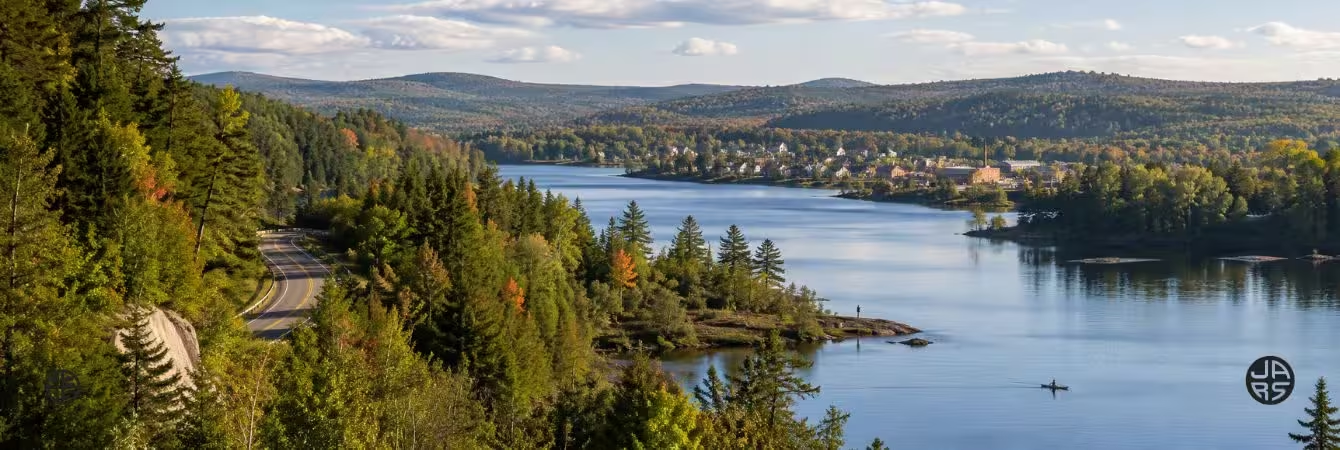
The Michigan-Wisconsin border near Iron River does not feel like two separate places.
On any given day, people cross between Michigan and Wisconsin for work, outdoor recreation, shopping, and weekend trips. Communities like Iron River, Caspian, Crystal Falls, Florence, and Phelps share more than a state line. They share forests, lakes, trails, history, and a way of life shaped by the Northwoods.
That connection is what makes this corner of the Upper Midwest different. Exploring the border region is less about crossing into another state and more about discovering the communities, stories, and landscapes that bring both sides together.
Why the Iron River Border Region Feels Like One Community
A map may show a state line between Michigan and Wisconsin, but daily life in this region often tells a different story.
Communities such as Iron River, Caspian, Crystal Falls, Florence, Fence, and Phelps are connected by more than nearby highways. Residents regularly travel between them for work, school activities, shopping, outdoor recreation, and community events. For many people, crossing the border is simply part of everyday life.
The landscape also helps bring both sides together. Vast forests, connected trail systems, rivers, and lakes stretch across state lines, creating a shared Northwoods environment that shapes how people live and spend their free time.
There is also a common history. Mining, logging, railroads, and outdoor tourism helped build communities throughout the region long before state borders played much of a role in daily routines.
That is what makes the Iron River border region unique. It is not just a collection of towns in two different states. It is a connected region with shared traditions, shared landscapes, and strong ties that continue today.
Communities That Shape the Border Region
The Michigan–Wisconsin border region is home to a collection of communities that share deep historical ties, strong outdoor traditions, and close economic connections. From mining towns in Michigan's Upper Peninsula to Northwoods destinations in Wisconsin, each community contributes to the character of the region.
Iron River, Michigan
Iron River is a small city in Michigan’s Upper Peninsula and the largest community in Iron County, serving as a hub for many surrounding towns and rural areas. Originally settled in 1882 and built on the region’s iron mining industry, the city has grown into a center for outdoor recreation, tourism, and local commerce. Located near lakes, forests, snowmobile trails, and the Wisconsin border, Iron River is known for its strong community ties and year-round recreational opportunities, making it a common destination for both residents and visitors exploring the region.
Learn more: Best Things to Do Near Iron River, Michigan
Caspian, Michigan
Located just south of Iron River, Caspian is a small city with deep roots in Iron County's mining history. Originally established as Palatka in 1901 and later incorporated as a city in 1949, the community grew around the iron ore industry that helped drive the region's early development. Caspian is especially known for its strong Italian immigrant heritage, with many families tracing their roots to the miners who worked in the area's historic operations.
The city is home to the Iron County Historical Museum, one of the largest museum complexes in Michigan's Upper Peninsula, featuring restored buildings, mining exhibits, and displays that highlight local life, logging, and industry.
Visitors can also see the historic Caspian Mine Headframe, one of the oldest remaining mining structures in Iron County. Although modest in size, Caspian plays an important role in preserving the stories, traditions, and cultural legacy that helped shape Michigan's western Upper Peninsula.
Crystal Falls, Michigan
Crystal Falls is the county seat of Iron County and one of the most historic communities in Michigan’s Upper Peninsula. Founded during the iron mining and timber boom of the late 1800s, the city was named after a nearby waterfall on the Paint River and continues to reflect its rich industrial heritage.
Visitors are often drawn to its historic downtown, scenic river views, and the iconic Iron County Courthouse, a sandstone landmark built in 1890 that overlooks the city from its highest point.
Surrounded by forests, lakes, and outdoor recreation opportunities, Crystal Falls also serves as a gateway to activities such as fishing, hiking, camping, snowmobiling, and exploring nearby Bewabic State Park.
Florence, Wisconsin
Located just south of the Michigan border, Florence is the county seat of Florence County and serves as the administrative center for the surrounding region. The community traces its roots to the discovery of iron ore in the 1870s and was named after Florence Terry Hulst, whose name was later adopted by both the county and the nearby Florence Mine.
Today, Florence is surrounded by the forests, lakes, rivers, and public lands of Wisconsin's Northwoods, making it a popular base for fishing, hunting, camping, and year-round outdoor recreation. Its location along major transportation routes and its close proximity to Iron River and Iron Mountain help maintain strong connections between communities on both sides of the Michigan–Wisconsin border.
Fence, Wisconsin
Fence is a rural town in Florence County, Wisconsin, located in the Northwoods near the Michigan border. Covering roughly 90 square miles and home to just 183 residents according to the 2020 census, it is one of the least densely populated communities in the region. The area is characterized by rolling forests, quiet lakes, winding trails, and extensive public lands that support fishing, hunting, ATV riding, snowmobiling, and other outdoor recreation. Originally shaped by the logging era and rural homesteading, Fence retains a peaceful, remote character that reflects the traditions and natural beauty of the Wisconsin–Michigan border region.
Phelps, Wisconsin
Located in northeastern Vilas County along the Michigan border, Phelps is a small Northwoods community with a population of about 1,238 residents. Often called the gateway to Wisconsin's Headwaters Region, the town is home to Lac Vieux Desert, the source of the Wisconsin River, and is surrounded by numerous lakes, rivers, and forests. Nearly three-quarters of the area lies within the Chequamegon-Nicolet National Forest, providing extensive opportunities for fishing, boating, hiking, camping, snowmobiling, cross-country skiing, and wildlife viewing. Known for its peaceful setting and year-round outdoor recreation, Phelps remains a popular destination for visitors seeking an authentic Up North experience.
Eagle River, Wisconsin
Eagle River is one of the most recognized destinations in northern Wisconsin and serves as the county seat of Vilas County. Known as the Snowmobile Capital of the World®, the city attracts visitors throughout the year with its extensive trail systems, Northwoods scenery, and strong outdoor recreation culture. Eagle River is also home to the World’s Largest Chain of 28 Connected Lakes, a major draw for boating, fishing, paddling, and water sports during the warmer months.
Originally settled in the 1850s, the community takes its name from the many eagles that once nested along the river. Today, Eagle River blends its historic “Up North” character with a vibrant tourism economy supported by seasonal events, vacation homes, resorts, and outdoor activities. Although larger than many neighboring communities, Eagle River remains closely connected to the broader Michigan–Wisconsin border region through tourism, seasonal travel, and shared outdoor traditions.
Why Wisconsin Residents Visit Iron River
For many people living near the Michigan-Wisconsin border, visiting Iron River is simply part of everyday life. The city sits within easy driving distance of communities such as Florence, Fence, Tipler, Phelps, and even Eagle River, which makes it a convenient destination for shopping, recreation, dining, and local services.
Outdoor recreation remains one of the biggest draws. Visitors regularly travel to Iron River and the surrounding area for fishing, hiking, camping, snowmobiling, skiing, and exploring the forests and lakes that define this part of the Upper Midwest. Seasonal events, scenic drives, and access to nearby communities in Iron County also bring travelers across the border throughout the year.
Since Michigan legalized adult-use cannabis, some Wisconsin residents have also added visits to licensed dispensaries in Michigan to their travel plans. For adults 21 and older, stopping at a cannabis dispensary near Iron River may be one part of a broader trip that includes outdoor activities, sightseeing, or visiting friends and family in the region.
What stands out most is how naturally people move throughout the border region. Whether the reason is recreation, tourism, shopping, or cannabis, many visitors see Iron River as a convenient hub within a larger Northwoods community that extends across both Michigan and Wisconsin.
Shared Outdoor Recreation Across Two States
Outdoor recreation is one of the strongest connections between communities on both sides of the Michigan Wisconsin border. Forests, lakes, rivers, and trail systems extend beyond state lines, creating a region where visitors often explore both states during the same trip.
- Lakes and Waterways: From Chicaugon Lake in Michigan to the many lakes surrounding Phelps and Eagle River, waterways play a central role in recreation throughout the border region. Boating, paddling, swimming, and waterfront camping remain popular activities on both sides of the state line.
- Forests and Hiking Trails: Large stretches of public land, including Ottawa National Forest and nearby Wisconsin forests, provide opportunities for hiking, wildlife viewing, and exploring the Northwoods landscape that defines the region.
- Snowmobiling Routes: Winter brings extensive snowmobile trail networks that connect communities across the border. Riders often travel between Michigan and Wisconsin during the same outing, and this make the region a popular destination for snowmobile enthusiasts.
Fishing Opportunities: Fishing is a year-round tradition throughout the border region. Lakes, rivers, and streams support popular species such as walleye, northern pike, bass, and panfish, attracting anglers from both states.
The History That Connects Michigan and Wisconsin
Long before the Michigan-Wisconsin border became a state line, the region was connected by its natural resources.
During the late 1800s and early 1900s, iron mining, logging, and railroad expansion helped shape communities on both sides of the border. Towns such as Iron River, Caspian, Crystal Falls, and Florence grew as workers arrived to support mines, timber operations, and related industries. Rail lines carried iron ore, lumber, and supplies throughout the Great Lakes region, creating economic ties that extended well beyond state boundaries.
Many of the people who settled here shared similar backgrounds. Immigrants from countries such as Italy, Finland, Sweden, and other parts of Europe came to work in the mines, forests, and railroads, leaving a lasting influence on local culture and traditions.
Although mining and logging are no longer the economic forces they once were, their legacy remains visible throughout the region. Historic downtowns, museums, mining sites, railroad corridors, and long-standing family connections continue to tell the story of a border region that developed together rather than apart.
Exploring the Border Region in Every Season
Each season offers different ways to experience the Michigan–Wisconsin border region, from spring waterfalls and summer lake activities to colorful fall scenery and winter snow sports.
- Spring: Spring is a great time to explore the region as snowmelt feeds rivers, streams, and waterfalls. Trails become more accessible, wildlife becomes active, and anglers return to local lakes and rivers. The season also offers quieter outdoor experiences before the summer crowds arrive.
- Summer: Summer brings warm temperatures and the widest range of outdoor activities. Visitors enjoy boating, kayaking, swimming, camping, hiking, ATV riding, and golfing throughout the area. Local communities also host festivals, markets, and events that showcase the region’s culture and recreation opportunities.
- Fall: Fall is known for its spectacular foliage and comfortable weather. Forests across the border region display vibrant colors, making scenic drives and hiking especially popular. The cooler temperatures create ideal conditions for outdoor exploration, while hunting seasons attract visitors to public lands and forests.
- Winter: Winter turns the border region into a destination for snow-based recreation. Extensive snowmobile trail networks connect communities throughout Michigan and Wisconsin, while Ski Brule offers skiing and snowboarding opportunities. Ice fishing, cross-country skiing, and snowshoeing provide additional ways to enjoy the Northwoods during the colder months.
Michigan Wisconsin Border FAQs
What Cities Are Near Iron River, Michigan?
Several communities are located within a short drive of Iron River. Nearby Michigan communities include Caspian, Crystal Falls, Alpha, and Gaastra. Nearby Wisconsin communities include Florence, Fence, Tipler, Phelps, and Eagle River.
Is Iron River Close to Wisconsin?
Yes. Iron River is located in Michigan's western Upper Peninsula, just a few miles from the Wisconsin border. Many Wisconsin communities, including Florence and Fence, are less than 20 miles away.
Why Do Wisconsin Residents Visit Iron River?
Wisconsin residents visit Iron River for outdoor recreation, shopping, dining, seasonal events, and access to nearby lakes, forests, and trails. Since Michigan legalized adult use cannabis, some visitors also travel to licensed cannabis retailers as part of a broader trip to the area.
What Makes the Border Region Unique?
The region is connected by shared forests, lakes, trail systems, and a history rooted in mining, logging, and outdoor recreation. Although separated by a state line, many communities on both sides maintain strong economic, cultural, and recreational ties.
Can Wisconsin Residents Buy Recreational Cannabis in Michigan?
Yes. Adults age 21 and older, including Wisconsin residents, can legally purchase recreational cannabis from licensed dispensaries in Michigan with a valid government issued photo ID. However, transporting cannabis across state lines remains illegal under federal law.